Takuya "Tom" Shiraiwa is the kind of name many Capcom players may have seen without really seeing. If you played Capcom games through the 1990s and early 2000s, his credit could have passed by at the end of a game while you were thinking about the final boss, the music, or whether to start another run. That is part of why his story is interesting. It is not a story about one famous designer taking the spotlight. It is about the quiet work that helped Japanese games make sense to players, partners, and branch offices outside Japan.
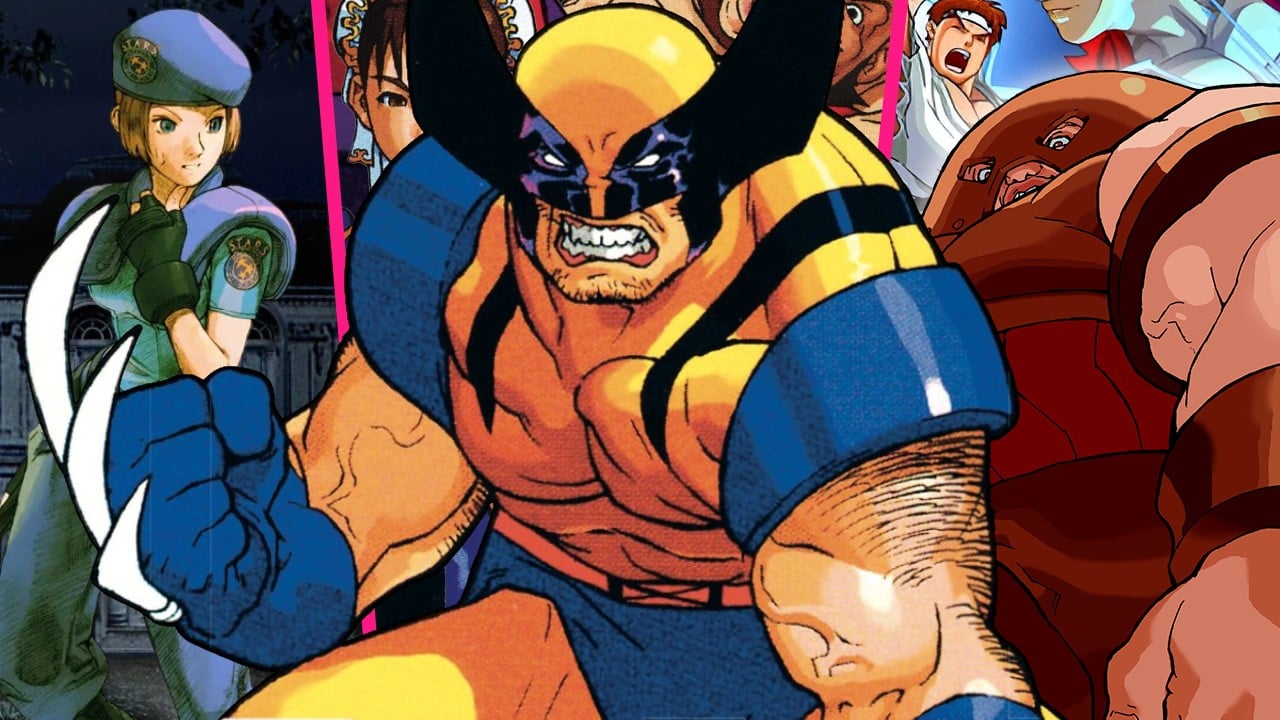
Time Extension’s interview frames Shiraiwa as an early bridge inside Capcom Japan, at a time when the company did not yet treat localisation as the formal process we know today. The trail to his story began with research into Slip Stream, Capcom’s unusual 1995 racing game and one of the few third-party titles for Sega’s System 32 hardware. From there, his wider credits and support work pointed toward familiar Capcom names, including Marvel vs. Capcom and Resident Evil. That makes the interview valuable for retro readers because it connects a small credit line to a larger change in how games travelled across languages and markets.
Retro Context
Older games were often built around tight hardware, tight schedules, and small screens of text. English was not simply dropped into a finished Japanese game with endless room to breathe. Menus, dialogue boxes, item names, and instruction text all had fixed limits. Shiraiwa described being given the available space, the line limits, and the number of characters that could fit. He then had to return English text with line breaks already placed so it would work in the game. That kind of job could look invisible when it went well, but it shaped how clear, natural, or awkward a game felt to overseas players.
Shiraiwa did not come into this through a modern career path with a localisation department waiting for him. He was a serious game player, and inside Capcom there were not many people who both knew some English and understood how games worked. That combination made him useful. Development teams began asking him for help because he could connect language to play. At the time, the work was thought of more as text translation than localisation. In practice, though, it already involved judgment, negotiation, interface limits, and a sense of what a player would need in the moment.
His English also improved in a very direct way: he had to use it. When overseas visitors came to Capcom, he could find himself left in meetings with people who did not speak Japanese. That forced communication to happen through whatever tools were available, including simple English and gestures. Later, after two years at Capcom, he was sent to Sunnyvale, California, to work with Capcom USA, also known as Capcom Entertainment. That time in the United States improved his English and made him a stronger link between Capcom’s Japanese developers and its overseas offices.
That liaison role matters because localisation was not only about the words printed on screen. Shiraiwa also carried feedback and suggestions from the American and European sides back to the development teams in Japan. In a modern company, that might be split across producers, localisation managers, brand teams, and regional publishing staff. In the period Shiraiwa describes, the work could gather around one person because that person could keep the conversation moving. He was translating language, but he was also translating expectations between different parts of the company.
The interview also gives a grounded picture of Capcom as a younger company. Shiraiwa remembered the period around Final Fight as a time when the company still felt rough in a positive sense. His point was not that the work lacked care. It was the opposite: people cared strongly about the games they were building, and the goal was to make games people wanted to play. For retro readers, that detail helps explain why some classic game development stories feel informal by current standards. The process could be messy, but it was also close to the work itself.
One of the most practical details is his request for more text space. Shiraiwa said he often asked teams to provide at least twice the room of the original Japanese. That is easy to understand once you think about what English text often needs: articles, spaces, longer words, and different sentence rhythm. Even with extra room, the job could still be hard. A short, readable line in a Capcom game may have required several decisions: what meaning to keep, what to shorten, where to break the line, and how to avoid making the interface feel crowded.
His work also reached into licensed games. Credits such as special thanks could hide many kinds of support, especially when outside rights holders were involved. With Goof Troop, Shiraiwa remembered Disney having detailed guidance for what its characters could and could not do. He had to translate that guidance for Capcom’s developers, then translate the team’s gameplay ideas into English so Disney could review them. That is not the same thing as simply translating a menu. It is a chain of approvals, character rules, and practical game design questions moving across languages.
Marvel created a similar kind of pressure. Shiraiwa recalled that Marvel had strict views about character behavior and personality when the companies began working together. That could create problems for a fighting game, where characters need to perform actions because the genre demands them. His example of arguing over whether a character could jump shows the odd friction between brand rules and game rules. A comic character might be defined one way on paper, but a head-to-head fighting game needs readable movement, shared mechanics, and fair play. Shiraiwa’s job was to stand in the middle and make that conversation possible.
Why It Matters
The practical value of Shiraiwa’s story is that it gives players a better way to read old credits. A special thanks line, a localisation credit, or a liaison role may represent far more than a small side task. It can mean someone helped a game fit into another language, explained outside feedback to a development team, handled a licence holder’s rules, or made sure a text box did not break under the weight of English. The caveat is important too: the interview should not be used to claim details it does not confirm. What it does confirm is still useful enough. Early localisation was human, improvised, and deeply tied to the realities of game production.
Z-retro View
Shiraiwa’s memories are valuable because they make early localisation feel less like a mysterious afterthought and more like practical problem-solving under pressure. Capcom’s games reached many players outside Japan because people inside and around the company worked through limits that most players never noticed. That does not mean every old translation should be excused, or that informal processes were always ideal. It means the history is more interesting than a simple good-or-bad judgment. In Shiraiwa’s case, the story shows how one person’s mix of game knowledge, language skill, and willingness to mediate helped classic games cross borders at a time when the rules were still being invented.