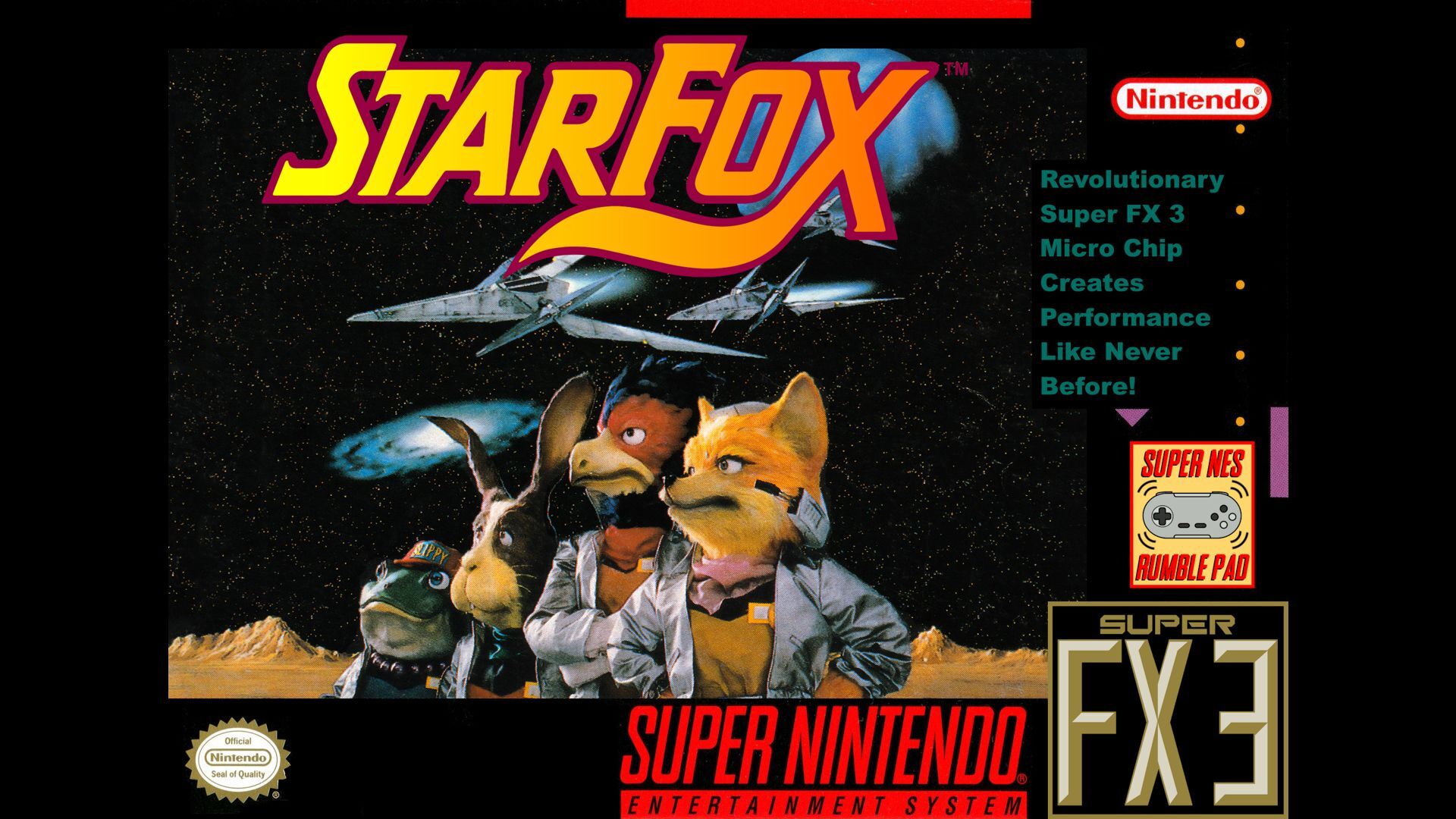
The original Super Nintendo Star Fox has a new upgrade patch from developer Sunlit and Randy Linden, the programmer associated with the latest SNES version of Doom. The patch brings the Super FX 3 into the game, aiming to make its 3D action run more smoothly while adding rumble support and MSU-1 audio.
Retro Context
Star Fox was built around Nintendo’s Super FX chip, which helped the SNES draw its polygonal worlds. The original game used a 10.7 MHz chip, often referred to as MARIO. The patch page says the Super FX 3 runs about eight times faster than that original chip and about four times faster than the 21.4 MHz GSU-1 and GSU-2 chips. Those numbers describe the chip’s speed; they don’t mean the whole game can simply run four or eight times faster.
That distinction matters because Star Fox divides its work between the console’s CPU and the Super FX. The CPU still has to tell the graphics chip when to draw, so it can hold back the faster hardware. Doom ’95 and The Ultimate Doom make different use of the Super FX: almost all of their game logic runs there, while the CPU gathers input, sends commands to the audio processing unit and copies the completed frame to video memory. Star Fox 1 and 2 depend more on the CPU to get each drawing cycle started, creating a bottleneck the new chip cannot remove by itself.
Why It Matters
In play, the upgrade is intended to deliver a more consistent 20 frames per second, with fewer dips than the original. It is an improvement, not a promise that every area will stay smooth: the game can still slow down in demanding scenes. Sector Z, with its many moving bars, is one example. The useful comparison is therefore between the original game’s more frequent drops and a patched version that handles many scenes better, while retaining some of the old strain.
The patch also enables FastROM mode, which lets the CPU run at its full speed. The page says Star Fox had to be converted to FastROM to boot with the FX3. Together with the faster graphics chip, this gives the game a small CPU-side lift as well. The reported CPU gain is about one percent; it is subtle enough that it may only become apparent when running FastROM and SlowROM versions side by side, where one can gradually pull ahead.
The frame rate is not uncapped, and the game’s speed is still tied to that rate. So the patch is not designed to make Star Fox race through its levels; it focuses on reducing slowdowns within the game’s existing setup. That is a helpful detail for players who might otherwise read the faster chip figures as a promise of a dramatically faster game.
There are also limits to how much of the screen the game can use. The FX3’s maximum canvas is 224 by 192 pixels. Star Fox and similar games use letterboxing because each frame, the CPU must copy the cartridge’s framebuffer to the screen using DMA. Copying a full-screen set of tiles would take too long. A faster graphics chip does not remove that transfer limit, so the patch cannot turn the game into a full-screen presentation.
The patch is available from Romhack Plaza at https://romhackplaza.org/romhacks/star-fox-super-fx-3-upgrade-super-nintendo-romhack. The FX3 official repository is listed as coming soon at https://github.com/LimitedRunGames-Tech/snes-fx3. FXPak Pro support is also something to look forward to once it is ready, and further device or software support may follow. For now, players should check that their setup supports the patch before planning a session.
Z-retro View
This project is a good reminder that new hardware ideas can make an old game feel more comfortable without erasing the limits built into its design. The faster chip, FastROM mode, rumble and MSU-1 audio give fans fresh ways to revisit Star Fox, while the remaining slowdown and letterboxing show where the original game’s CPU and video-transfer demands still matter. It will not perform like a modern PC recompilation, but a steadier experience on original hardware is a meaningful result for SNES players.