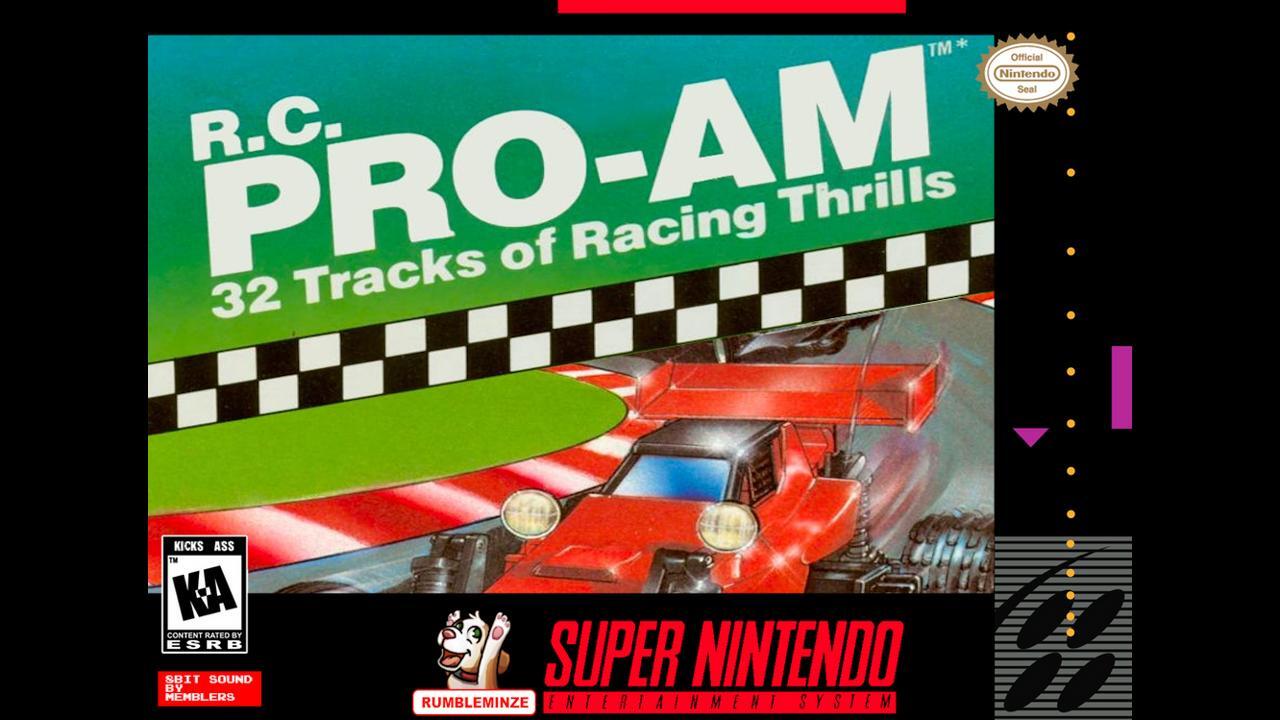
The classic eight-bit library is filled with ambitious titles that pushed original consoles to their absolute limits, often resulting in performance hiccups when the action became too intense. For fans of the isometric racing genre, the frantic track battles of the era hold a special place in gaming history. Now, a dedicated developer known as Rumbleminze has released a brand new conversion that brings the beloved remote-controlled racing game R.C. Pro-Am over from its original home on the Nintendo Entertainment System directly to the Super Nintendo hardware. This project is not a full remake with new assets, but rather a direct port of the original code designed to take full advantage of the more powerful sixteen-bit system.
Retro Context
During the late nineteen eighties and early nineteen nineties, top-down and isometric racing games were a massive staple of the home console experience. R.C. Pro-Am stood out from the pack by blending tight, responsive steering with high-speed vehicular combat. Players navigated winding tracks while dodging hazards, collecting power-ups, and actively firing weapons at rival racers. Because the original console had strict limitations on how many moving objects could be displayed on a single horizontal line, busy moments on the track would often cause the graphics to flicker aggressively or the frame rate to drop significantly. The screen was simply trying to draw too many cars, missiles, and track hazards at the exact same time.
The Super Nintendo, which arrived in the following generation, featured significantly more headroom for rendering graphics on screen. It featured a much higher sprite limit and faster processing capabilities. By porting an eight-bit game natively to the sixteen-bit console, developers can use that extra processing power and graphical overhead to completely eliminate the performance bottlenecks that plagued the original cartridge. This creates a unique playing environment where the classic game logic runs exactly as it used to, but the visual presentation is no longer choked by strict hardware constraints.
How The Conversion Works
Rumbleminze has a history of bringing classic eight-bit titles over to the Super Nintendo, and this latest release employs several specific technical tricks to greatly improve the experience. By utilizing FastROM and HiROM memory mapping techniques, the conversion allows the Super Nintendo to transfer data much faster than a standard cartridge configuration would typically allow. This increased data transfer speed is paired directly with the console's expanded sprite limitations to smooth out the gameplay. The end result is a version of the beloved racer that greatly reduces the notorious sprite flicker and performance slowdown that players would normally encounter during a chaotic final lap.
Audio handling is another fascinating aspect of this conversion project. Because the original hardware used a very specific sound chip, bringing that audio over to the Super Nintendo requires custom emulation. This port uses the Memblers 2A03 Emulator to accurately recreate the iconic sound effects of engines revving and tires squealing. Interestingly, while many Super Nintendo enhancement projects include high-fidelity MSU-1 audio patches for compact disc quality music, this release intentionally omits that feature. The original eight-bit cartridge famously lacked any background music during the actual races, so adding an MSU-1 soundtrack would step away from the authentic original experience.
The Endless Loop Experience
Beyond the technical enhancements on display, the core of what makes this remote-controlled racer memorable remains completely intact. The game is famous for utilizing an endless loop structure. Rather than working toward a traditional final boss fight or a definitive ending sequence, players simply continue racing through increasingly difficult tracks until they eventually lose all their continues. While that lack of a grand finale might deter some modern players who prefer linear campaigns, the sheer pick-up-and-play energy is what kept the cartridge in the console for so many retro fans. The tight controls feel excellent, and the simple thrill of shooting a weapon at a rival car right before the finish line provides a highly repeatable and satisfying gameplay loop.
It is also worth noting for multi-platform retro enthusiasts that the game has an interesting history across different console hardware. While most players strictly associate the title with the Nintendo Entertainment System, an official port was actually released for the Sega Genesis later on. This new Super Nintendo conversion provides yet another unique way for retro gaming fans to compare how different generations of hardware handle the exact same chaotic racing formula.
Why It Matters
For the retro gaming community, this release represents a highly practical way to revisit a beloved classic without the historical headaches. If you are someone who loves the authentic feel of eight-bit physics but gets easily frustrated by disappearing sprites and sluggish frame rates, this Super Nintendo port offers the absolute best of both worlds. It preserves the exact gameplay logic and visual style that you remember, but it applies a layer of performance polish that was simply impossible on the original hardware. It is a fantastic option for casual evening play sessions where you just want to race around a track for a few loops without committing to a massive role-playing game or a highly complex modern release.
Z-retro View
We view these cross-generational hardware ports as some of the most exciting technical work happening in the retro community right now. Rather than discarding the original eight-bit aesthetic in favor of newly drawn sixteen-bit graphics, this conversion respects the original art while fixing the invisible hardware barriers that originally held it back. It is a brilliant technical exercise that results in a noticeably superior playing experience, allowing a classic endless runner to shine brighter and run smoother than ever before on hardware it was never originally meant to touch.