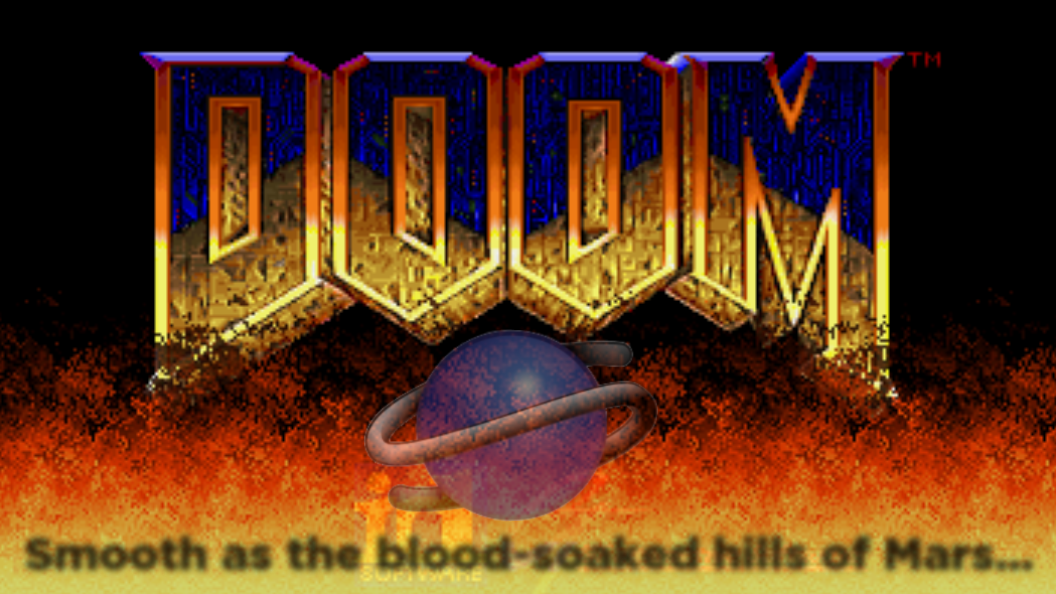
Saturn Doom has a reputation that has followed it for years: it is an official console port of a major PC classic, but it is also remembered for uneven speed and heavy slowdown. Homebrew developer Fafling is still working on that problem, and version 0.3 of his optimization patch gives the Sega Saturn release another meaningful push forward.
Retro Context
For retro players, this kind of patch sits in an interesting place between preservation and repair. It does not replace the original retail game or erase the history of how that version shipped. Instead, it gives people a new way to study and play a difficult console port with some of the friction reduced. That matters because many 1990s PC-to-console conversions were shaped by tight hardware limits, different control expectations, and the challenge of translating fast 3D-style action to machines that were never identical to a DOS PC.
The Saturn version of Doom is especially useful as a retro case study because it is not just a curiosity. It is a recognizable game on distinctive hardware, and its weaknesses are easy to feel during normal play. When a modern patch improves performance on that kind of release, it helps show where the original port was limited by the finished code rather than by the broad idea of the console itself. That is a careful distinction, and it is why work like this draws attention from Saturn fans, Doom fans, and homebrew watchers alike.
Version 0.3 was posted in the Resources area at SegaXtreme. The download includes Sega Saturn Patcher version 1.95, which is used to apply the patch. Fafling targets the Japanese release of Doom, choosing it as the base because it came after the North American version. That is important practical information for anyone following the project, since a patch like this is not meant to be applied blindly to any copy of the game.
Why It Matters
The headline improvement is speed. According to the source report, some levels can now run at a frame rate around two and a half times faster than the retail release. Fafling also posted a comparison video showing the original game, the earlier 0.2 patch, and the new 0.3 patch running Doom’s three demos side by side. In that comparison, the unpatched game is often around 11 frames per second, while the previous patch could reach about 25 frames per second in the same general demonstration.
Version 0.3 is not only a numbers exercise. Fafling also shared footage focused on wall rendering fixes, which points to a broader cleanup effort rather than a single performance trick. The patch also adds control quality-of-life features described in the included readme. Those details make the update more useful for actual play, because a smoother frame rate is only part of what makes an older shooter feel better when revisited today.
The caveat is that Saturn Doom is still Saturn Doom. Fafling has said the patched game now runs better than the Atari Jaguar port and close to the PlayStation port, sometimes slightly better and sometimes still worse. He also noted that some complex non-Jaguar levels can still drop below 10 frames per second, with Sever the Wicked named as an example when viewed from a demanding corner of its large open area. Simpler stages and Jaguar-based levels are described as regularly reaching the 30 frames per second mark.
Reader Takeaways
- This is a patch for the Japanese Saturn release of Doom, not a general replacement for every version of the game.
- The biggest confirmed gain is performance, with some levels reported at roughly two and a half times the retail frame rate.
- The work also includes rendering fixes and control quality-of-life changes, so it is not only a speed patch.
- The most demanding areas can still slow down, so expectations should stay grounded.
From a preservation angle, the most valuable part may be how specific the work is. Fafling is not making a broad claim that every rough Saturn port can be transformed. He is finding more places in this particular Doom codebase to optimize, then showing the results through direct comparisons. The original Saturn port was handled by Rage Software for id Software, and the new patch demonstrates that even a well-known commercial release can still contain room for careful modern improvement.
Z-retro View
This is the right kind of retro upgrade: useful, transparent, and measured. It gives players a better way to experience a troubled port without pretending the retail version was secretly perfect or that every limitation can be patched away. For collectors, the original game remains part of Saturn history. For players, Fafling’s work makes that same history easier to revisit. The most balanced way to see version 0.3 is as a strong fan-made repair pass, not a rewrite of Doom’s console legacy.