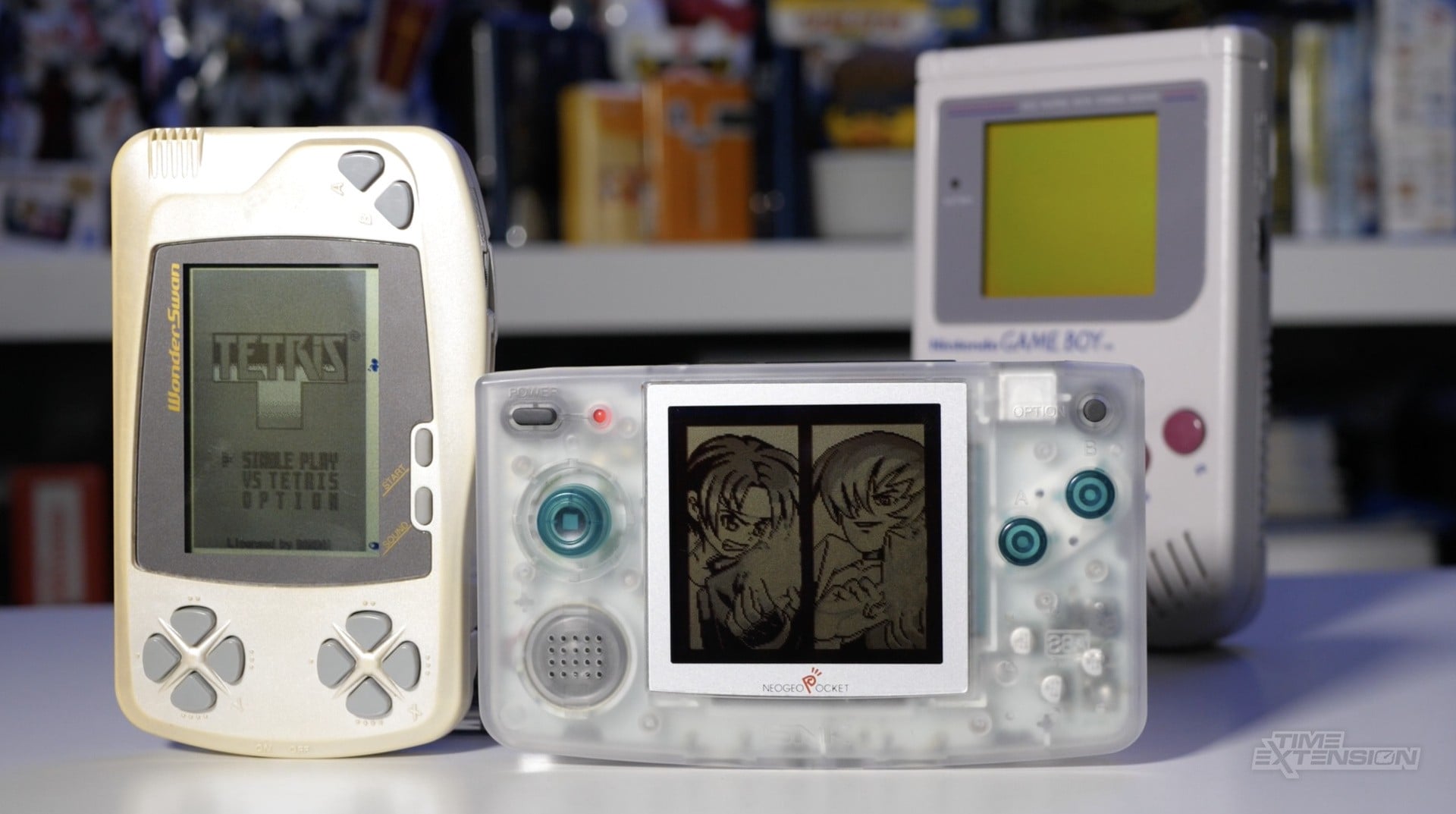
Nintendo's Game Boy was not just a strong launch. It became one of those rare pieces of hardware that seemed to settle into everyday life almost immediately. It was portable, easy to understand, full of memorable games, and kind to batteries in a way many rivals were not. Those simple strengths helped it sell in huge numbers around the world, and its life stretched far beyond what most handhelds could expect. Pokemon, which first appeared on the system in 1996, gave the old machine another major burst of energy.
That success did not mean Nintendo was left alone. Early in the Game Boy's life, companies such as Atari, Sega, and NEC tried to pull players away with more advanced machines. Their mistake was believing that stronger technology would decide the handheld market by itself. At the time, backlit color screens could drain batteries quickly, and that made the systems less truly portable. Nintendo's less flashy approach ended up being the better fit for how people actually used handheld games.
By the late 1990s, Nintendo was finally preparing a proper update in the Game Boy Color. Around the same time, two Japanese companies saw a chance to make their own move. SNK, known for the Neo Geo in arcades and at home, introduced the Neo Geo Pocket. Bandai, a toy company with meaningful handheld experience, prepared the WonderSwan. Both arrived with a similar idea: offer a fresh monochrome portable at a moment when the original Game Boy still looked surprisingly healthy.
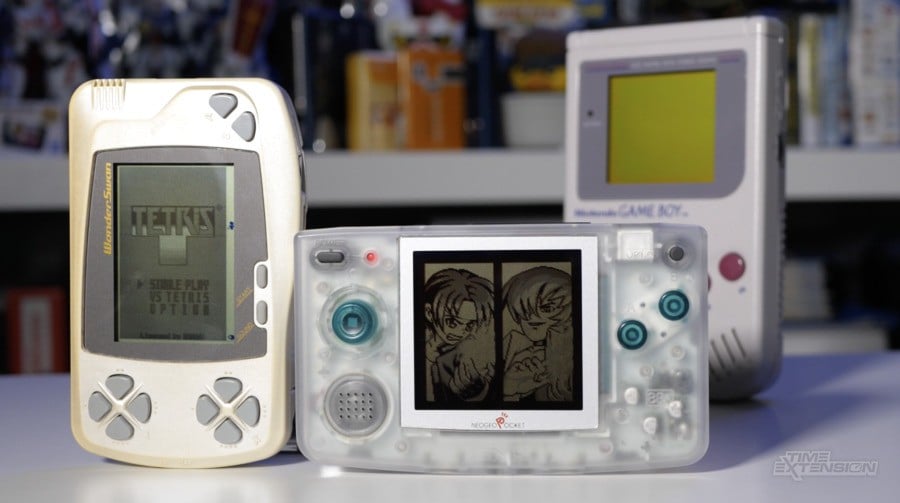
The timing was rough. The Neo Geo Pocket launched in October 1998, the same month Nintendo released the Game Boy Color. SNK reacted quickly, and the Neo Geo Pocket Color followed in March 1999, only five months after the first model appeared. Bandai's WonderSwan reached the market in March 1999 as well. Before long, Bandai also announced that a WonderSwan Color was on the way, meaning both companies had introduced black-and-white systems just as color was becoming the new expectation.
The original Neo Geo Pocket library stayed tiny, reaching only nine games. Those games do have one nice saving grace: they work on the color model too. The relationship also ran in the other direction for many titles, since a number of Neo Geo Pocket Color games can run in monochrome on the first machine. This compatibility gives the short-lived original system a little more charm today, even if it also underlines how quickly SNK had to move beyond it.
With hindsight, the thinking behind both machines is not hard to follow. Hardware takes time to plan, design, manufacture, and ship. SNK and Bandai would have seen the old Game Boy enjoying renewed momentum after Pokemon, while Nintendo refreshed the existing hardware line instead of replacing it with something radically different. From that angle, a lean monochrome handheld still looked like a reasonable bet. The problem was that Nintendo's next step changed the shape of the race.
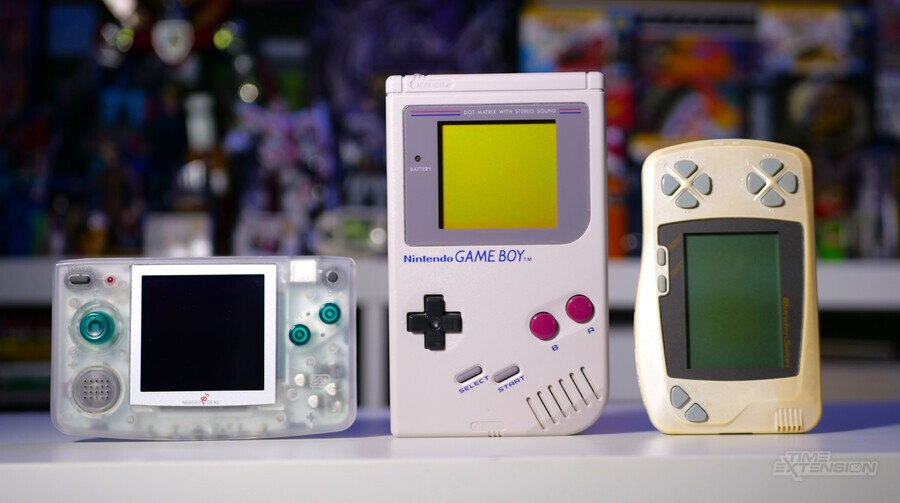
The Game Boy Color did not simply add a power-hungry screen and hope for the best. It used reflective thin-film transistor display technology, giving players a color screen without needing a backlight. That mattered enormously for a portable device. Once Nintendo revealed that solution, SNK and Bandai were in an awkward spot. Their monochrome hardware was already too far along to easily turn around, so both companies went ahead while also preparing color replacements.
The result was a very late-1990s collector story: buy the monochrome machine, enjoy its oddball appeal, then trade up quickly when the color version arrives. The Neo Geo Pocket had games such as King of Fighters R-1 and Neo Geo World Cup '98, while WonderSwan import fans could jump into unusual picks like its Beatmania port. Those first models were not without appeal, but the color versions were clearly the ones many players wanted to keep.
The upgraded machines earned real affection. The Neo Geo Pocket Color and WonderSwan Color both have strong followings, and the WonderSwan line later gained the SwanCrystal variant, a refined little system that still has fans today. That makes it too simple to call either company a total failure. Bandai's WonderSwan eventually sold 3.5 million units. That was nowhere near the sort of number Nintendo would celebrate for a Game Boy line, but it was still a serious result for an alternative handheld.
SNK's machine had a harder commercial road. Even with a global release and a software library many players still praise, reports place total Neo Geo Pocket sales at around two million units worldwide. After SNK went bankrupt in 2001 and was acquired by Japanese pachinko manufacturer Aruze, the handheld was discontinued. On paper, both the Neo Geo Pocket and WonderSwan can look like disappointments, but collectors continue to speak warmly about them because they show a different path handheld gaming might have taken.
That is the lasting appeal of this almost 30-year-old moment. SNK and Bandai both challenged Nintendo with interesting machines, and both were caught by the same shift at almost the same time. Their monochrome systems arrived just as Nintendo proved color could work without giving up the Game Boy's practical strengths. It leaves one classic retro question hanging in the air: what would the handheld market have looked like if SNK or Bandai had reached stores with color before Nintendo did?