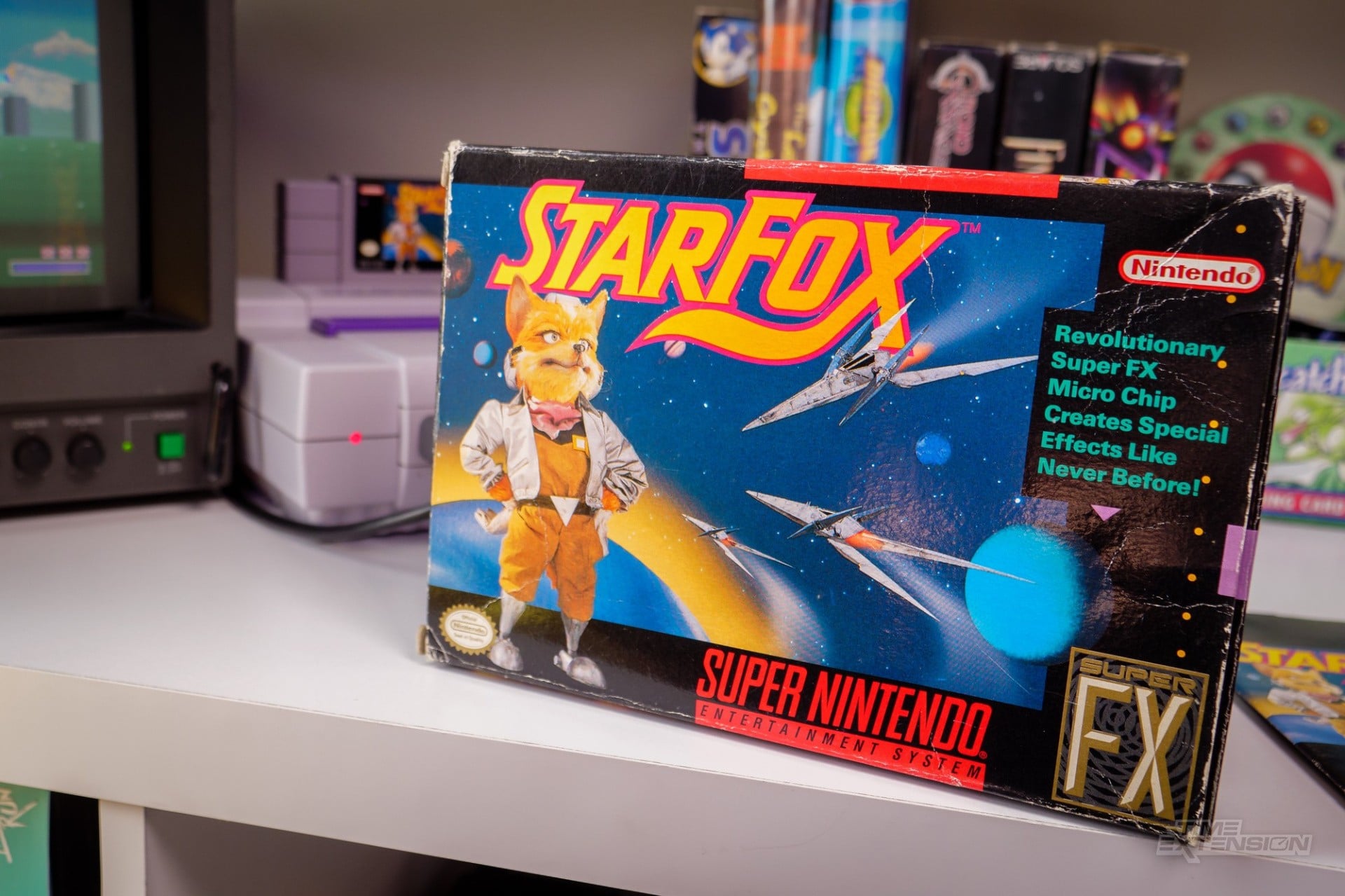
Star Fox has always felt like one of those Nintendo moments where the future arrived a little early. On the surface, it was a Super Nintendo space shooter about brave pilots, sharp turns, and chunky polygon ships. Under the shell, it was something much stranger and more ambitious: a console game built around a custom chip, shaped by a small British studio that had pushed its way into Nintendo's world through pure technical nerve. With a new Star Fox outing bringing the series back into conversation, it is a fitting time to look again at how the original game came together, why it mattered, and why the story behind it still has a warm glow for anyone who enjoys the engineering side of retro games.
The partnership that led to Star Fox did not begin in a boardroom. It began with Argonaut, a young team working out of a house and trying to make machines do things they were not expected to do. At that point, Nintendo was already a huge force in games, while Argonaut was small, hungry, and living close to the edge financially. Getting attention from a company like Nintendo was not easy. Argonaut found a way in by doing something bold: it bypassed the Game Boy's copy protection and made a 3D demo run on Nintendo's monochrome handheld. That was not a normal introduction, but it was the kind of technical statement that could not be ignored.
Jez San, Argonaut's founder, understood the shock value of what his team had achieved. The Game Boy was not thought of as a place for 3D visuals, and Argonaut's demo showed that the limits were not as fixed as people assumed. San took the work directly to Nintendo during CES and tried to reach someone senior enough to understand what it meant. He found Don James, showed him the Game Boy running Argonaut's work, and left a strong impression. The reaction was not only about the demo itself. It was also about the fact that a small outside team had found a way around Nintendo's protection system and then used that access to show something genuinely new.
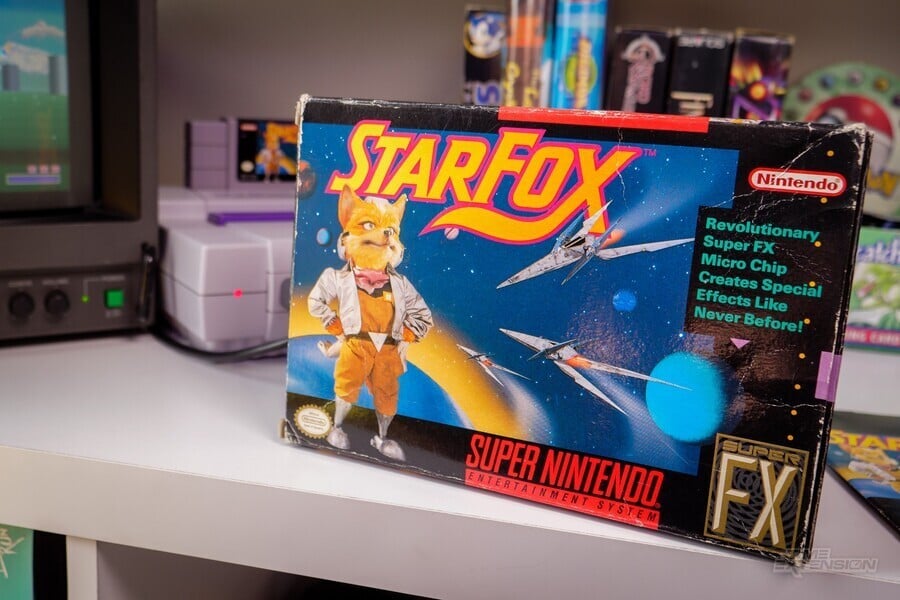
That could have ended badly, but Nintendo saw the larger opportunity. The company invited Argonaut closer rather than simply shutting the door. The relationship grew from a surprising encounter into a serious collaboration, and Argonaut staff were soon working with Nintendo far more directly. Communication played a big part in that move. This was before modern email and fast online workflows, so the early back-and-forth between London and Japan involved faxes and slow exchanges. For a project built around experimental technology, that was not enough. Bringing Argonaut's people to Nintendo's headquarters in Japan made it easier to solve problems, make decisions, and keep the creative and technical sides moving together.
Dylan Cuthbert, who later became known for Q-Games and the PixelJunk series, was one of the young programmers involved. His Game Boy 3D work helped open the door, but Argonaut's role quickly expanded beyond software tricks. During an early visit to Kyoto in July 1990, Nintendo invited San to show the 3D technology Argonaut had been developing for both the NES and the Game Boy. Cuthbert's handheld demo was part of that conversation. The pitch was no longer just about proving that polygons could appear on unlikely hardware. It was about asking what Nintendo hardware might become if the right extra technology was placed beside it.
The situation was remarkable partly because of the people involved. Cuthbert was only 18, and San was in his early twenties. They were young British developers sitting inside the most famous video game company in the world and explaining a path toward 3D games. Argonaut itself was not a polished giant. It was a small studio with about a dozen people in a North London house, trying to stay afloat while chasing ideas that were ahead of the common console market. That contrast gives the Star Fox story much of its charm. It was not a neat case of one large company buying a finished solution. It was a risky meeting of Nintendo's production discipline and Argonaut's restless technical imagination.
The most important result of that meeting of minds was the Super FX chip. Star Fox was not simply a clever SNES cartridge using ordinary hardware in an unusual way. It depended on extra processing power built into the cartridge itself. San regarded the chip as the first graphics processing unit, and Argonaut held patents connected to that work. At the time, it also became a major RISC microprocessor success before ARM later became widespread in mobile phones. For players, those details were invisible. What they saw was movement, depth, and angular 3D craft moving across a television through a machine they already owned.
Creating the chip required more than a good idea. San needed hardware talent with the right background, so he drew on people he knew from the British technology scene, including Ben Cheese, whose earlier work connected him with places such as Konix, Sinclair Research, and Flare Technology. Cheese died in 2001, but his contribution, along with the work of the wider UK-based hardware team, was important to the project. The goal was not just to design something impressive. It had to be affordable enough to sit inside a game cartridge. That practical requirement made the achievement more demanding, because the chip had to support Nintendo's commercial reality as well as Argonaut's ambitions.
Looked at today, Star Fox's visuals are rough, spare, and unmistakably early. Its ships are made from hard-edged shapes, its worlds are simple, and its 3D scenes can seem modest beside later games. In its own moment, though, the effect was electric. Computers such as the Amiga and Atari ST had made 3D more familiar to some players, but on home consoles it was still rare. For many SNES owners, Star Fox made the machine feel as if it had found a hidden gear. San felt that the Super FX allowed Argonaut and Nintendo to promise something bold and still deliver more than expected. That is one reason the game landed with such force.

Nintendo's creative process also shaped the final game in ways Argonaut had to learn. Shigeru Miyamoto could make big changes late in development, and that was stressful for the team. Krister Wombell, one of the programmers, remembered that the later stages could feel tense because ideas might be discarded and rebuilt even when the finish line was close. At the same time, he saw a clear difference between European development habits and Nintendo's approach. Nintendo had experience, structure, and a process aimed at taking a project from nothing to a finished game over roughly a year or so. For the young Argonaut team, working inside that system was an education.
That education was not only technical. Argonaut had to understand how Nintendo weighed feel, clarity, and polish. A 3D chip could make the game possible, but it could not by itself make the game readable or fun. Star Fox needed levels that guided players through space, enemy patterns that made sense at speed, and a sense of character that turned a technology showcase into a Nintendo release. The final game carried both sides of the partnership. Argonaut supplied the breakthrough hardware and much of the 3D know-how. Nintendo gave the project a production culture, a stronger game shape, and the confidence to make the strange polygon world feel approachable on a living room console.
When Star Fox arrived, it was both a critical and commercial success. It also began a profitable period between Argonaut and Nintendo, leading to more games powered by the Super FX chip. One of the most famous follow-ups was a Super Nintendo sequel that stayed unreleased for many years and did not officially reach players until 2017. For Argonaut, the work raised its status across the development world. The studio had not only helped create a hit game; it had shown that a small outside team could bring Nintendo a working path into console 3D. For San, though, the memory of that period was not simply triumphant. It carried a bittersweet edge.
The relationship eventually fractured because Argonaut wanted to go further. San and his team pitched a 3D platform game at a time when that kind of project had not really been done. They built a prototype using Yoshi, which made the idea both exciting and difficult. Nintendo had not allowed outside companies to handle its characters in that way, and it was not ready to take that risk. The prototype pointed toward the kind of 3D platforming that would soon become central to the industry, but it also exposed the limits of the partnership. Argonaut had proved itself clever and capable, yet Nintendo's control over its characters and internal direction remained firm.
Even with that downbeat ending, San remained proud of what Argonaut had delivered. His satisfaction came from proving that the team could do what it said it could do: help Nintendo make strong 3D games, create a pioneering graphics chip, and make that chip cheap enough to fit into a cartridge product. He also took pride in showing Nintendo that Argonaut really was as inventive as it appeared during those first demos. That legacy is the heart of the Star Fox story. It is not just about one beloved SNES game, but about a moment when a small team taught a giant something useful and left behind technology, confidence, and a new sense of what console games could attempt.
Z-retro's view is that Star Fox is best remembered as both a game and a meeting point: Nintendo's careful craft on one side, Argonaut's bold 3D engineering on the other. The result was imperfect by modern standards, but historically important, warmly distinctive, and still worth understanding on its own terms.