At the end of the Nineties, Naughty Dog had every reason to keep doing what already worked. Its four Crash Bandicoot games for PlayStation had sold in huge numbers, and Crash had become one of the faces people connected with Sony's first console. He was not officially the PlayStation mascot, but for many players he filled that role with a grin, a spin attack, and a lot of crate smashing. So when PlayStation 2 arrived in 2000, the safe path would have been easy to understand.
Instead, Naughty Dog used the new console as a fresh start. The studio was already moving toward a different kind of adventure, one that would not simply repeat the structure and personality of Crash Bandicoot with nicer graphics. Jak and Daxter had to feel like they belonged to the PS2 moment: bigger, smoother, more cinematic, and more connected as a world. The goal was not only to make a new platform game, but to find out what kind of place Naughty Dog could build when the hardware opened up more room.
A New Pair Of Heroes
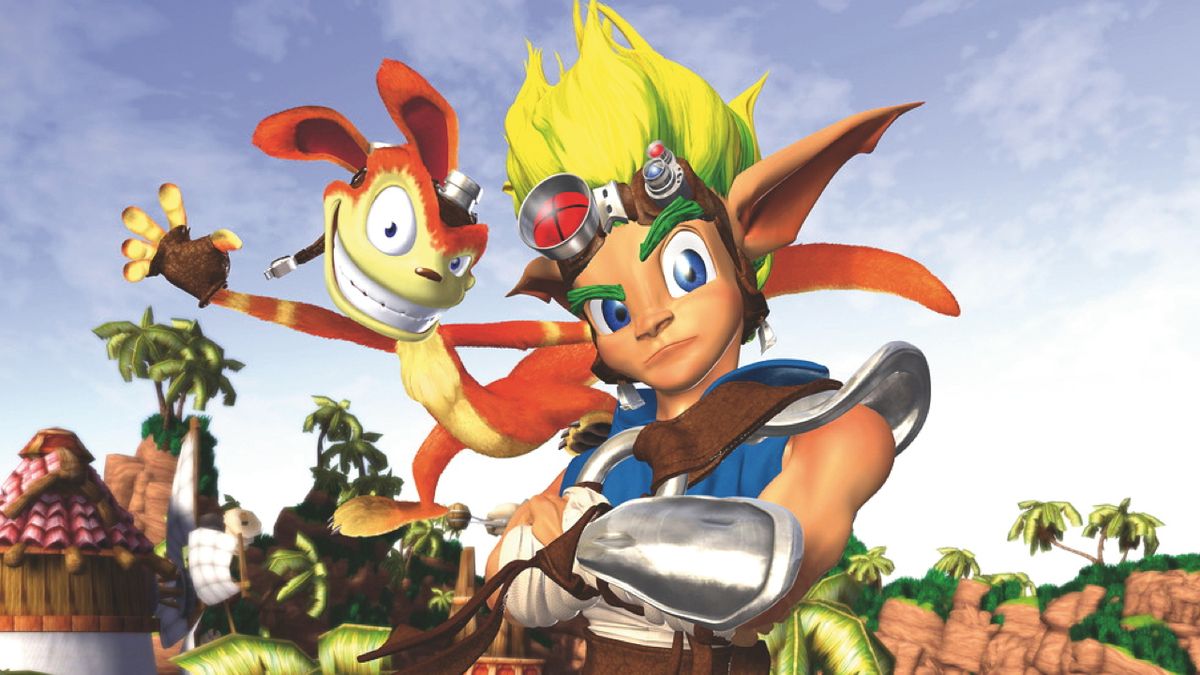
Dan Arey, who worked as writer and designer on the debut game, wanted Jak and Daxter to have more than a simple excuse for running and jumping. Jak needed a reason to move through the world that went beyond rescuing a princess or grabbing coins. Daxter, meanwhile, became the lively counterweight. He was the sidekick who could turn a serious moment sideways, make the scene funnier, and give the adventure a different rhythm. That mix helped the pair feel less like mascots dropped into levels and more like characters caught up in trouble.
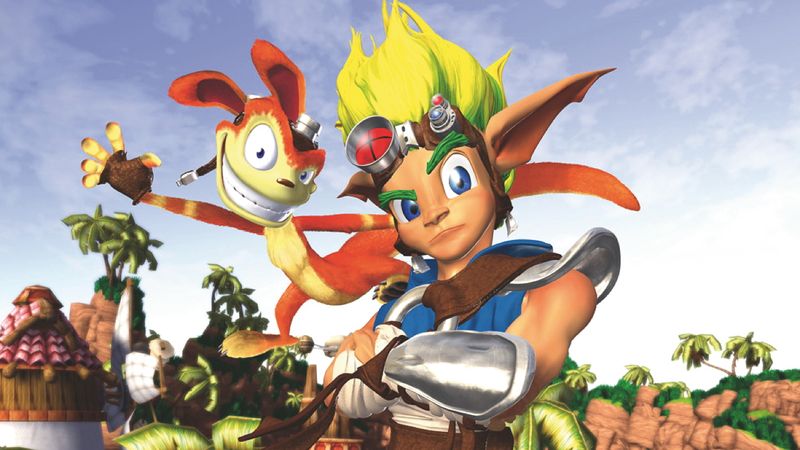
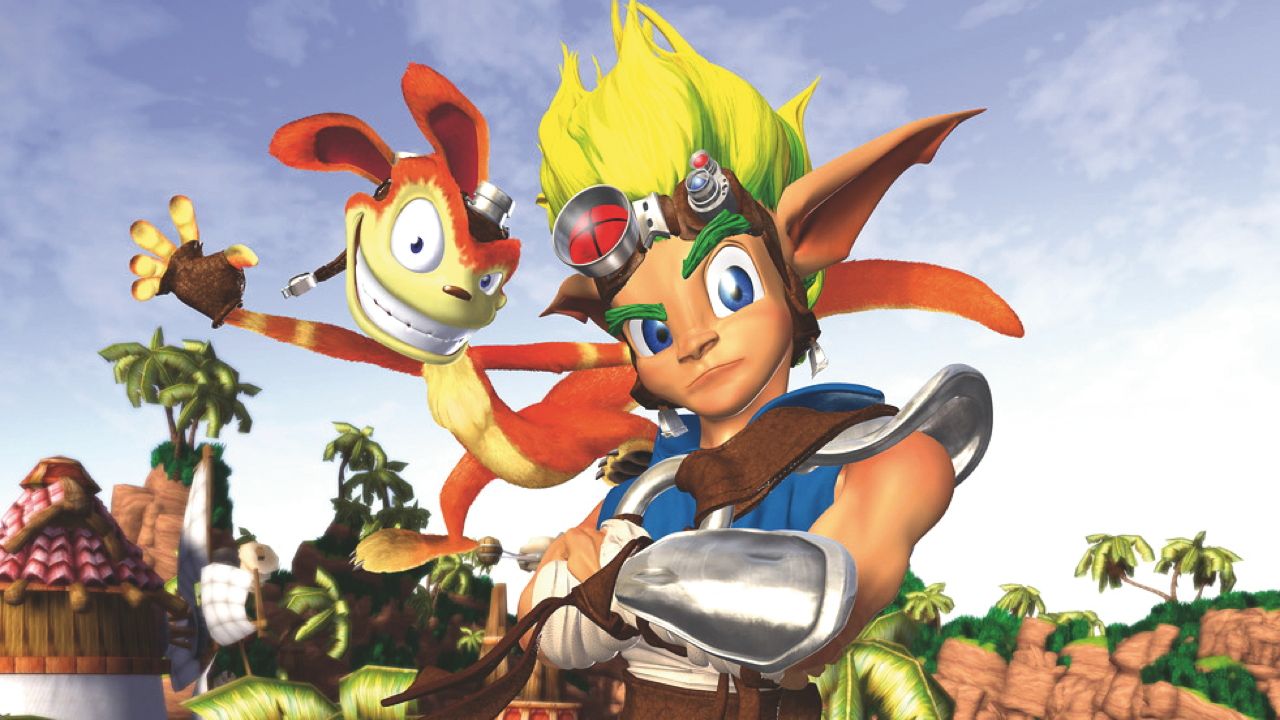
That trouble begins with curiosity and bad judgment, which is a very clean setup for a young hero. Jak and Daxter are warned away from an island because Dark Eco is there. Dark Eco is not just a spooky substance in the scenery; it is energy with unusual properties, and the warning gives it weight before the player fully understands it. Jak, presented as a rebellious teenager, goes anyway. Daxter then falls into a vat of Eco and is changed into an Ottsel, part otter and part weasel. The transformation gives the game its comic spark, but it also gives the journey a personal reason to exist.
Naughty Dog treated the story as part of the reward for playing. The idea was that progress should not only mean collecting another item or reaching another platform. It should also mean learning more about Eco, the mysterious Precursors, and the wider world that held those secrets. For a studio that put a lot of weight on art, that world also needed to look special. The team kept pushing toward the most beautiful thing it could manage on PlayStation 2, not as a separate showpiece, but as part of the pleasure of exploring.
The Precursor Legacy Opens Up
The first game, Jak and Daxter: The Precursor Legacy, was built to feel more immersive than the older Crash Bandicoot format. Crash had used a hub-and-spoke approach, with players moving from a central space into separate challenges. For Jak and Daxter, Naughty Dog favored an open-world, mission-based structure. That choice changed the tone. The world could feel less like a set of disconnected stages and more like a place the characters crossed, learned, and affected as they went.
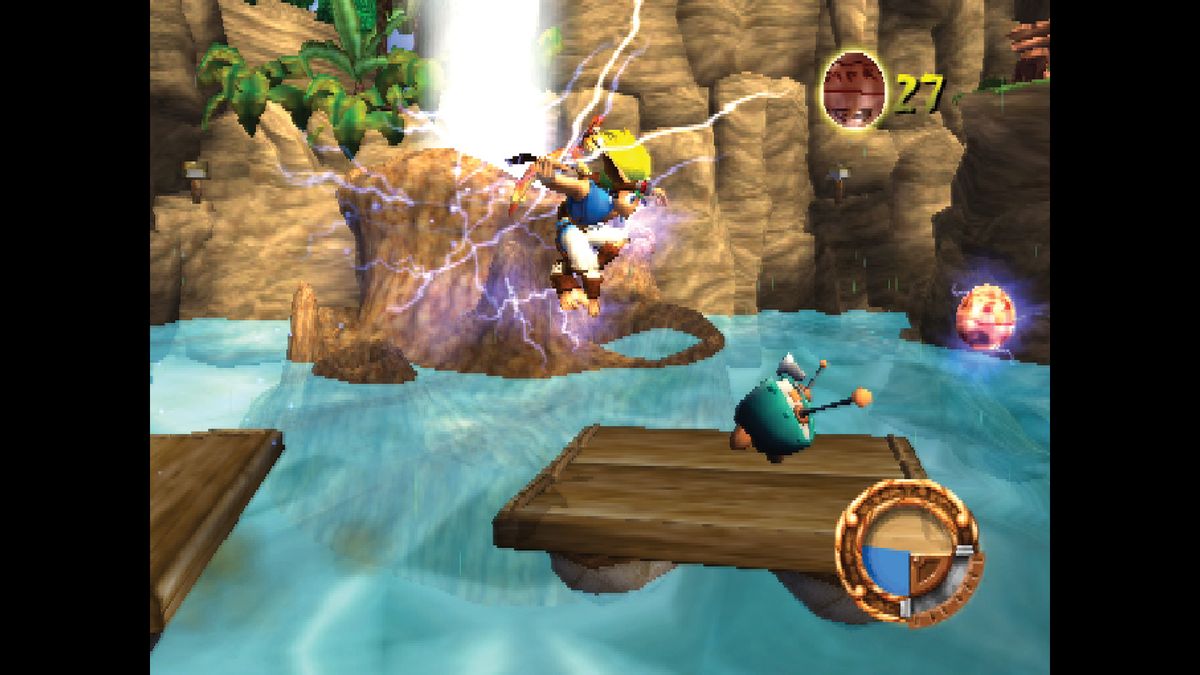
Gameplay systems were shaped with the same care as the characters and locations. The team created three main collectables, each with its own job. Different colors of Eco gave Jak powers and could also affect inanimate objects. Precursor Orbs worked as currency. Power Cells often arrived as rewards for completing missions. Arey explained that the team wanted specific resources with separate uses, and that separation mattered. It helped the player understand what each item meant, instead of turning every shiny object into the same kind of prize.
The First Game's Main Resources
- Eco came in different colors, gave Jak powers, and could interact with objects in the world.
- Precursor Orbs served as currency, giving the collection side of the game a clear practical role.
- Power Cells were commonly used as mission rewards, tying progress to completed tasks.
The ambition went beyond mechanics. Naughty Dog was not expected to deliver the same kind of authenticity associated with a Pixar film, but that was the level the team was chasing in spirit. The point was not to copy Pixar, and the PS2 was still very much a machine of its time. The point was to make animation, character, place, and story feel believable enough that players would buy into the adventure. In retro terms, that is part of why The Precursor Legacy still has such a distinct glow: it was reaching for a rounded animated-world feeling on early-2000s hardware.
Jak 2 Changes The Scale
Jak 2 took the series into a very different space. The new centerpiece was Haven City, a large metropolis filled with pedestrians and busy skies. Zoomer craft moved above the streets, giving the city a sense of vertical motion and everyday traffic. A radar-like system could suggest where players might go next, but the open-world design left them free to move around on their own terms. That freedom was exciting for players, yet it also made life harder for the designers, because a city that gives people options has to keep working even when they do not follow a neat path.
The sequel also worked harder to make Jak feel like a person who had changed. Before the events players control, experiments involving mysterious forces leave him able to transform into a darker, more powerful version of himself. He can trigger that form by collecting Eco from defeated enemies. Naughty Dog then used the cost of that experience, along with the passage of time, to shape him as the lead character. Jak was no longer only the silent young adventurer from the first game. The story had moved him forward, and the design followed.
That shift in tone did not erase the series' interest in movement and exploration. It changed the kind of place those ideas lived in. Haven City gave Jak somewhere dense and controlled to push against, while the story kept circling identity, power, and where he belonged. In the first game, curiosity sends him into danger. In Jak 2, the world feels more complicated, and his place in it is less certain. The retro charm here is not just in the chunky PS2-era city streets or the rush of Zoomer travel. It is in watching a platform hero become part of a rougher narrative experiment.