
A Familiar Shape With A Clear Purpose
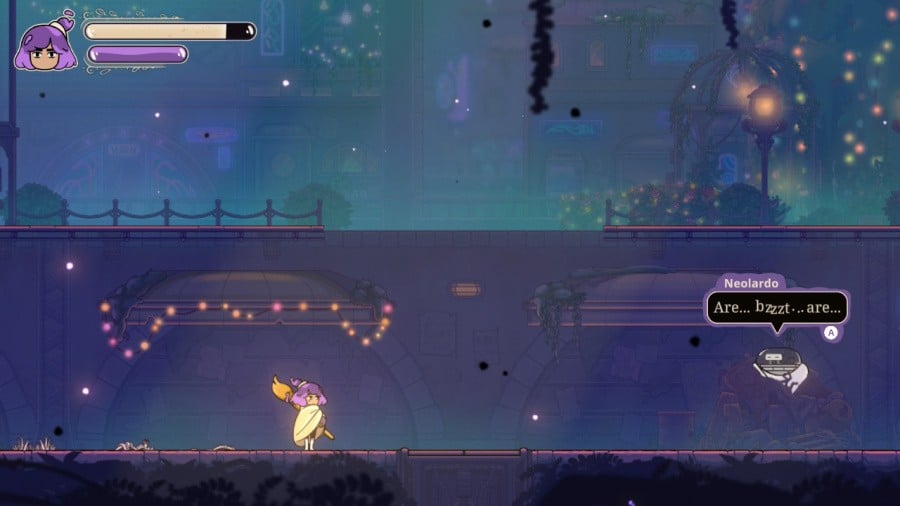
Constance arrives in a space that already has a long memory. Indie Metroidvanias have spent years turning inner struggle into worlds to explore, and it is easy to think of games such as Hollow Knight, Ori, and Celeste when looking at its broad outline. This is another side-scrolling adventure where emotional pressure takes physical form, and it knows the language of the genre well. What helps it stand apart is not a sudden reinvention of that language, but the way it uses familiar tools to speak about overstimulation, concentration, and the quiet damage that can build when a person keeps pushing past their limits.
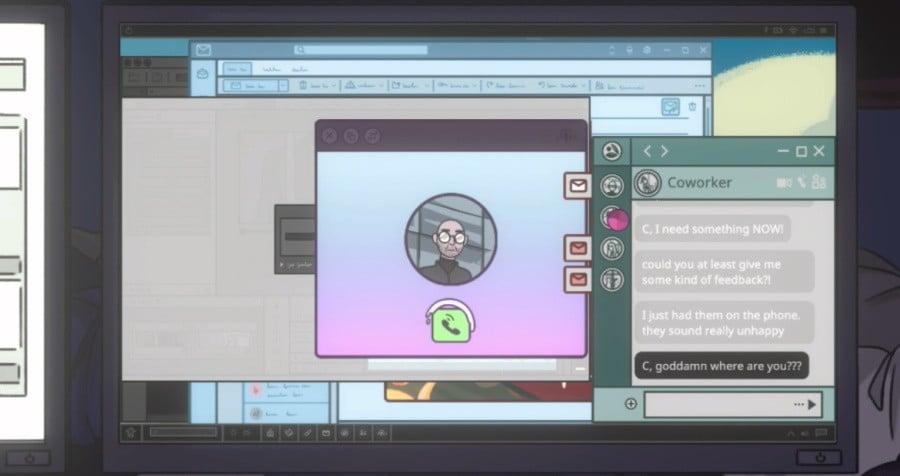
The story follows Constance as she slips away from an overwhelming real life into a fantasy realm shaped by her own mind. That world is full of beauty, but it is not a clean escape. Its dangers, characters, and strange spaces carry the same strain that she is trying to leave behind. At points, the game pulls back and shows small pieces of her ordinary life: missed or difficult work deadlines, distance from people who care about her, and basic needs such as water and sleep being pushed aside. These scenes keep the fantasy from feeling like decoration. They remind the player that every painted corridor and hostile creature is tied to something more grounded.
Paint, Movement, And Pressure
The first impression may feel very familiar to anyone who has spent time with modern Metroidvanias. Some props and mechanisms, including levers and elevators, sit close enough to Team Cherry's style that comparisons may be hard to shake at first. The usual movement vocabulary is here too, with dashes, wall jumps, and ability-gated routes leading the player deeper into the map. Yet the longer Constance runs, the more its own rhythm comes through. The game is built around attention. A section that has been cleared once is not automatically harmless on the way back. Enemies, puzzles, and platforming routes still ask to be respected, and careless play is quickly punished.
That focus is tied neatly to Constance's paintbrush, which works as both weapon and identity. In her real life she is an artist, and in this inner world the brush becomes the tool that lets her fight, move, and survive. It also gives the game some of its most pleasing animation. A ground dash turns her into a slick puddle of purple paint, with a squelchy energy that recalls Splatoon without losing its own painterly feel. Wall movement uses a similar idea, letting her blend into surfaces before pushing onward. Alongside the health bar is a paint meter, and that meter decides how freely these special abilities can be used. When it drains, the color leaves both her hair and her brush, making the resource feel visible instead of abstract.
Constance does not try to pull the Metroidvania apart and rebuild it from scratch. Its combat, exploration, and ability progression will make sense right away to genre fans. The strength is in how confidently those pieces are handled. Moving through the world feels good, attacks have style, and the paint-based abilities make basic traversal more expressive than a plain jump-and-slash loop. There are rough spots in the moment-to-moment flow, including some platforming sections that can become tedious, but the core action remains enjoyable because the game keeps asking for active play. It is not a background adventure. It wants the player awake, watching, and ready to adjust.
Boss fights are more uneven. Some encounters can feel repetitive, while others show the game's systems at their best. High Patia, found in the Astral Academy area, is visually striking, though the fight does not make especially inventive use of that area's satisfying Aerial Boost power-up. Cornelis lands better, pushing the Plunge ability into creative use with a harsh downward strike that becomes more than a simple attack. Across the game, the bosses work best when they connect their spectacle to the movement ideas the player has just learned. When they do not, they can still impress on style, but the design does not always rise to the same level as the presentation.
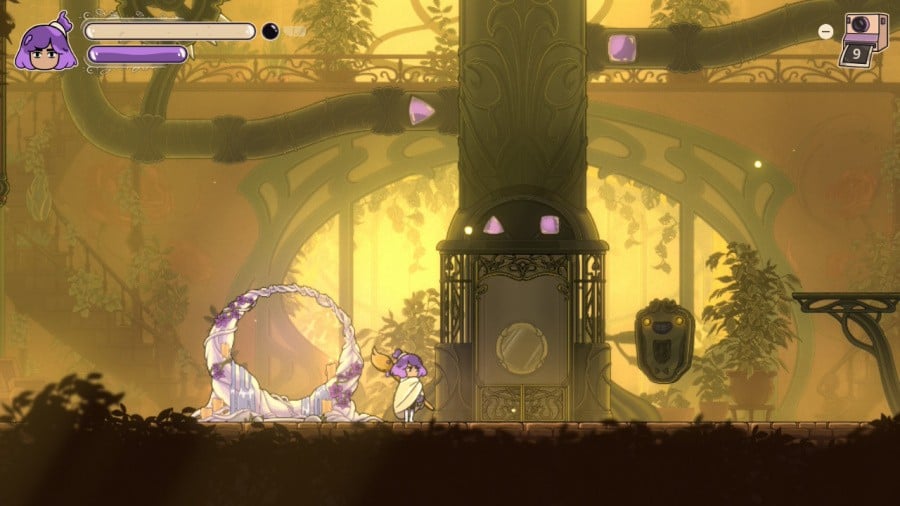
Atmosphere is one of Constance's strongest parts. It carries a touch of classic Metroid isolation, but the world does not feel empty. There are enough signs of life for the setting to seem inhabited, while still leaving room for loneliness and unease. Each area has its own identity, with Chaotic Carnival standing out through deep orange backgrounds and circus-flavored scenery. The visual variety matters because the game is so closely tied to the mind of its lead character. These places are not just backdrops for upgrades. They help show how charming, messy, bright, and frightening Constance's inner escape can become.
The breaks from the game's intensity are carefully chosen. Death screens meet the player with the phrase "lost in thought," a small touch that fits the theme without overexplaining it. Flashbacks to Constance's real life also slow the pace, often through low-stakes minigames such as designing a logo or playing a violin rhythm sequence. These moments keep the emotional thread present without turning the adventure into a lecture. On Switch 2, the game has been described as smooth in both handheld and docked play, with the screen showing off its color palette especially well. Performance and Quality options are available there, though Balanced mode already looks strong and runs nicely.
As a full package, Constance is an easy recommendation for Metroidvania fans who want a familiar adventure with a thoughtful center, especially at around 10 hours. It has visible influences and a few weak patches, and players who are already cautious about the genre may not be won over by its structure alone. Still, its visuals, movement, and ideas give it real character. Taking a design style that has been around for decades and using it to say something specific is difficult, and Constance manages that with warmth, color, and purpose. It may not redraw the map for Metroidvanias, but it leaves a mark of its own.