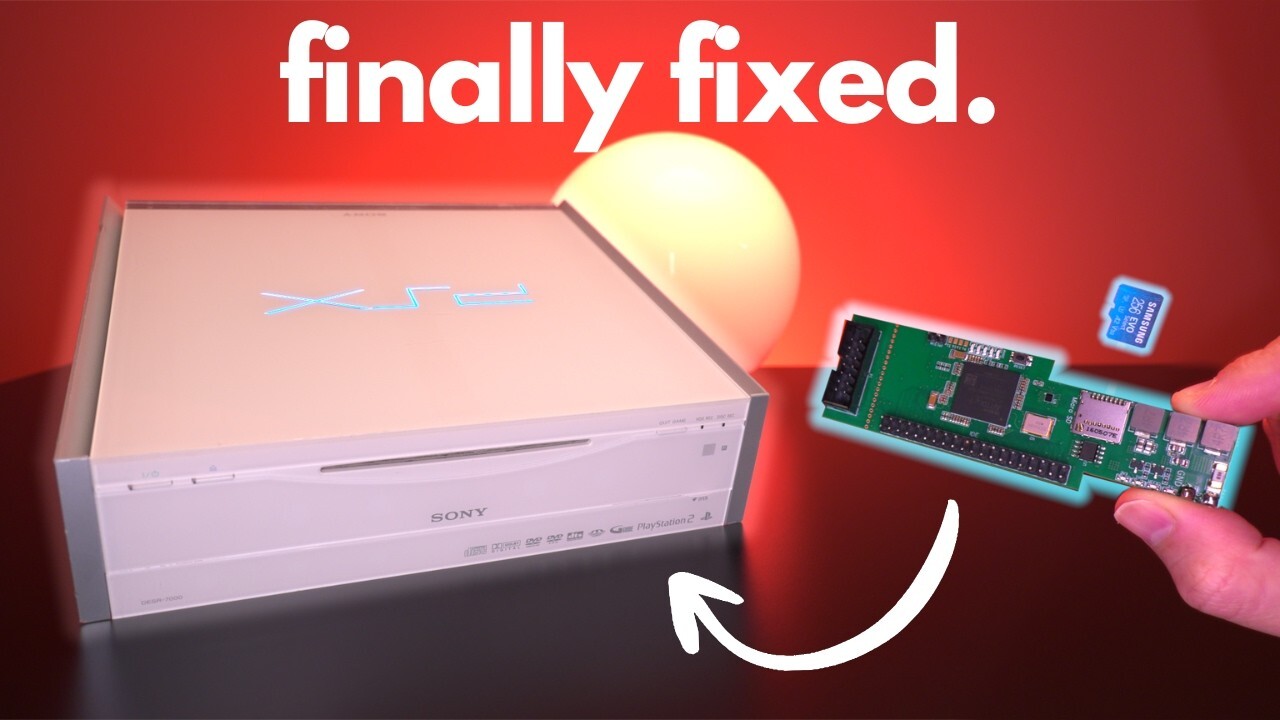
A recent video from the YouTube channel Macho Nacho Productions has brought a fascinating piece of custom hardware into the spotlight: the ATA Express. Showcased by the channel's host, Tito, the device is essentially a versatile IDE emulator. However, its most compelling party trick is its unique ability to emulate the hard disk drive found inside the first generation of the Sony PSX. By replacing ancient, failing mechanical storage with a modern MicroSD card, the ATA Express provides a vital, life-saving intervention for a highly specialized and increasingly fragile piece of PlayStation hardware history.
Retro Context
To truly understand the importance of this circuit board, it helps to look back at the incredibly unique console it is designed to rescue. The Sony PSX is very often confused with the original gray PlayStation, which was colloquially referred to as the 'PSX' by gamers and magazines throughout the late 1990s. However, the actual official Sony PSX was a heavy, premium, Japan-only piece of consumer electronics released during the PlayStation 2 generation. It was essentially a PlayStation 2 hardware core combined with a massive digital video recorder and a television tuner, all wrapped in a sleek, oversized white chassis. It was meant to be the ultimate center of the living room entertainment center, relying heavily on its internal mechanical hard drive to store recorded television programs, system updates, and its complex user interface.
Because the PSX was designed primarily as a secure digital video recorder for television, Sony implemented incredibly strict anti-piracy and hardware security measures. The console's internal IDE hard drive was cryptographically locked directly to the specific motherboard of the machine it was installed in. This engineering choice has created a massive, ticking time bomb for retro gaming enthusiasts today. Mechanical hard drives from two decades ago are now well past their expected operational lifespan. When the drive in a PSX finally fails—and they all eventually do—the entire console is effectively bricked. Without a functioning, properly paired hard drive, the PSX refuses to boot entirely, turning a highly collectible piece of gaming history into an extremely heavy paperweight.
The ATA Express tackles this major hardware preservation hurdle head-on. By intercepting and emulating the original IDE data interface, the board tricks the console into thinking its original, married mechanical drive is still safely present. Users can take the contents of a working, originally paired hard drive and clone them directly over to a modern MicroSD card using the ATA Express. Moving away from spinning physical platters over to solid-state flash memory not only rescues the hardware from an inevitable mechanical death, but it also makes the massive machine run noticeably cooler and quieter during operation.
Why It Matters
For retro hardware collectors and game preservationists, tools like the ATA Express have become absolutely essential. The device provides a practical, tangible solution to aggressive hardware DRM that threatens to permanently destroy aging multimedia consoles. There is a caveat for early adopters, however: currently, the device is only fully compatible with the absolute first generation of the Sony PSX hardware. Thankfully, the creator is already hard at work on a follow-up revision. This planned update aims to expand compatibility across different PSX motherboard revisions and is being purposefully designed to physically mimic the shape of a standard 3.5-inch hard drive. This form factor change will make safely mounting the board inside the console's internal drive bay much simpler for users.
Beyond the PlayStation ecosystem entirely, the ATA Express holds some truly incredible promise for the Sega Dreamcast community. The creator has noted that the device has the underlying potential to act as an Optical Drive Emulator for Sega's final home console. While there are already several excellent optical drive emulators on the market for the Dreamcast today, they all share one major common drawback: you must physically remove the original GD-ROM disc drive to install them. The ATA Express could potentially allow users to load homebrew games from an SD card while keeping the original disc drive fully installed and functional. While the creator notes that this would likely require a completely different physical board design for a clean internal installation, the concept of retaining original disc functionality alongside solid-state loading is a highly requested feature.
Z-retro View
The development of the ATA Express represents an impressive technical achievement that highlights a fundamental shift in the world of retro gaming hardware modifications. We are moving well past simple region unlocks and video output upgrades, entering an era where directly bypassing aggressive, early-2000s hardware locks is the only way to keep these historic machines out of landfills. While its current PSX compatibility is somewhat narrow, the ability to clone failing mechanical drives to secure MicroSD storage is a massive win for hardware preservation. Furthermore, if the developer can successfully follow through on the Sega Dreamcast integration—allowing players to keep their physical media drives while simultaneously enjoying solid-state loading—this underlying technology could quickly become a foundational tool for multiple distinct hardware communities.
Key Features of the ATA Express
- Replaces failing mechanical hard drives in first-generation Sony PSX consoles
- Allows cloning of original, hardware-locked drive data to modern MicroSD cards
- Upcoming hardware revision will feature a 3.5-inch form factor for easier internal mounting
- Shows potential to act as a Dreamcast Optical Drive Emulator without removing the GD-ROM drive