Adrenaline and ARK are both heading toward major new versions, and the interesting part is not only that the projects are active. According to Wololo, Adrenaline is moving toward version 8 while ARK is moving toward version 5, and the timing is connected to cooperation between the developers behind them.
The source frames this as a return to talking about PSP development after a quieter stretch, but it also makes clear that the subject is bigger than a simple release note. ARK and Adrenaline developers have been sharing ideas, code, and practical knowledge. That matters because both projects sit close to the same technical problem: keeping PSP custom firmware useful, maintainable, and flexible on old hardware and, in Adrenaline’s case, within the PS Vita’s PSP environment.
What Is Changing
One major part of the work is the move around the newest still-maintained PSP SDK. For ordinary homebrew, a maintained SDK is already valuable because it gives developers a cleaner base for building software. For custom firmware, the job is more specialized. Developers also need support for firmware pieces and plugins, not just standalone PSP programs.
That is where the custom firmware SDK comes in. The source explains that the older M33SDK idea has evolved into psp-cfw-sdk, which is now installed by default with the PSPSDK itself. In plain terms, the development setup is becoming less scattered. That does not automatically make custom firmware development easy, but it can reduce friction for people already working at that level.
Another important change concerns Pentazemin. It began in ARK-4 as a compatibility layer that allowed ARK to work under Adrenaline. Now it has been moved into Adrenaline itself. The reasoning is practical: Pentazemin was a simplified form of Adrenaline’s SystemControl module, described in the source as the heart of the custom firmware. Moving it back into Adrenaline gives that shared compatibility work a more natural place to live.
The user-facing side is also changing. Adrenaline is now able to load ARK directly from scratch, without relying on external loaders. A setting is being added to Adrenaline’s menu so users can switch between EPI and ARK. EPI is the new nickname for Adrenaline’s CEF, or Custom Emulated Firmware, which the source says is based on the older TN-CEF line.
The XMB Work
The PSP’s XMB is central to this story because it is the first interface many users associate with the handheld. Older custom firmware setups often used a VSH Menu opened with the Select button. That approach became familiar, but the source describes it as limited by software-based drawing and by code that had only changed modestly over time.
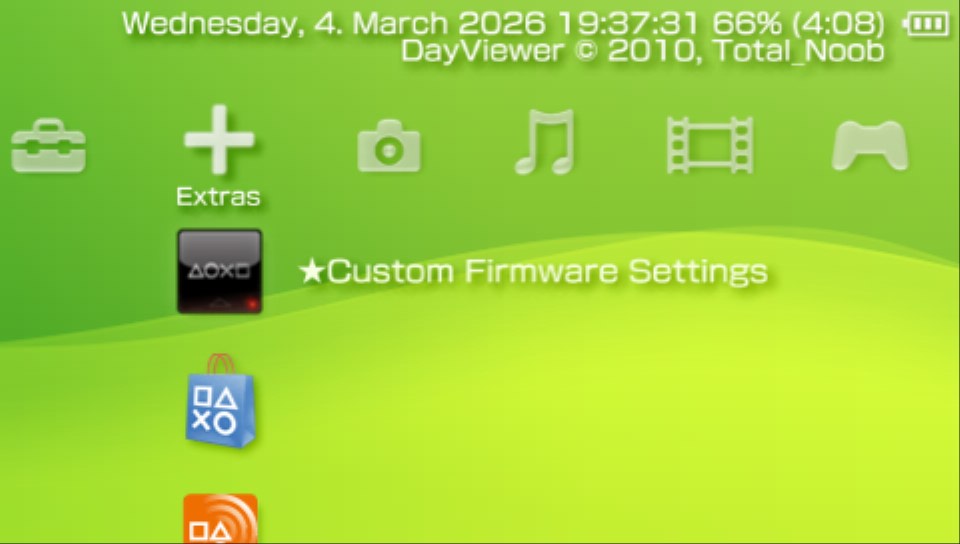
A more native route had already been explored through XMBControl, created by Total_Noob, now known as TheFl0w. Instead of placing a separate custom menu over the interface, XMBControl showed a way to expose custom settings through the XMB itself. The newer work appears to continue that line of thinking: make custom firmware controls feel more at home inside the PSP’s own interface.
ARK-5 is also experimenting with what can be drawn on top of the XMB. Developer m-cid has worked out hardware-accelerated drawing over the interface, leading to a 3D spinning cube demo included with ARK-5 as a replacement for the older VSH Menu. Because this is part of the custom firmware, the source says it should be fairly easy to expose an API so plugins can use a simpler system for drawing graphics on the XMB.
Why It Matters
For most readers, the practical value is not that every technical detail will be visible immediately. The value is that the PSP and PS Vita homebrew scene is still receiving infrastructure work, not just small surface changes. Cleaner SDK support can help developers. Direct ARK loading inside Adrenaline can reduce setup complexity. Better XMB integration could make future plugins feel less awkward. The caveat is that this is still development news, so users should wait for finished releases and clear instructions before changing a working setup.
Z-retro View
This is a good example of why retro homebrew remains worth following carefully. The PSP is old enough to be a nostalgia machine, but its software scene is still technical and active. Adrenaline 8 and ARK 5 sound important because they point to shared maintenance, not isolated novelty. If the work lands cleanly, it could make PSP custom firmware feel more coherent for developers and more convenient for users, while still respecting the limits and risks that come with modifying legacy systems.