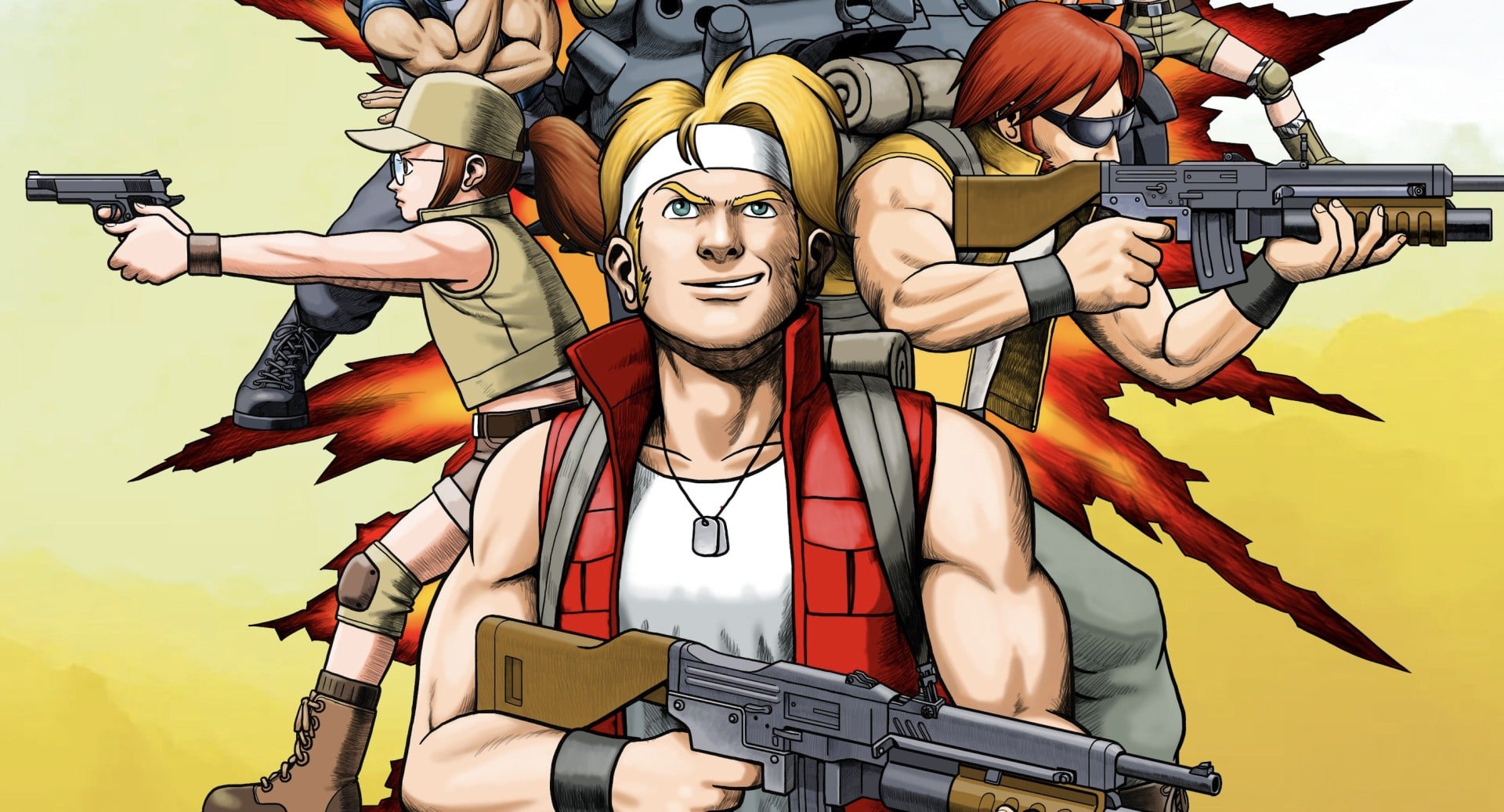
Metal Slug is now remembered as one of the great arcade run-and-gun games: loud, funny, exact, and full of tiny animation touches that make every screen feel alive. Yet the first game did not begin with Marco Rossi and Tarma Roving charging across the battlefield. According to Kazuma Kujo, who directed the original Metal Slug, the early plan placed the tank at the heart of everything. In that earlier form, the player did not control little soldiers at all. The Metal Slug Super Vehicle 001 was not a power-up, a rescue, or a famous mascot waiting at the side of the road. It was the playable hero. That version, often discussed by fans as a kind of lost Metal Slug Zero, was not a quick sketch. It was built far enough to be tested, and its failure to win over arcade players forced Nazca to rethink what the game was supposed to be.
That fact changed how many fans understood the series. For years, Metal Slug's secret history was difficult to piece together, partly because so many Japanese arcade developers of the period were credited under nicknames, and partly because staff interviews were rare in English. One important lead came around January 2008, when mecha writer Ollie Barder shared an interview with Kujo on the old Insert Credit forums before those forums were deleted. The discussion itself focused on R-Type Final, not Metal Slug, but Kujo's career list included the game. Years later, a direct email interview with Kujo helped bring more of the first Metal Slug's story into English. Later, parts of those conversations were used with permission in Bitmap Books' Metal Slug: The Ultimate History from 2019, which also included a new Kujo interview and ten more interviews with other members of the wider development story.
Kujo's route into game development has a wonderfully human beginning. He joined Irem in 1989 and first worked on R-Type II as a tester. The reason was not that he was a shooting-game master. It was almost the opposite. Kujo has explained that a manager wanted someone who was especially bad at shooters, so he asked the planning department who struggled the most. Kujo was named, and that put him in front of R-Type II. The test did not last long. After roughly half an hour, he was judged to be so poor at the game that he was removed from that testing role. It is a small, funny detail, but it also says a lot about how arcade games were tuned. Developers needed to see how systems worked not only for expert players, but also for people who found the challenge awkward, sharp, or unfair.
Like many Japanese developers of the late 1980s and early 1990s, Kujo was not always credited by his real name. He later explained that many companies in Japan did not allow staff to list their full names in game credits at the time. Studios could be closed and cautious about revealing who worked on what, so developers often appeared under nicknames. Kujo said this was the case for several of his games. He was clearly credited as director on Kaitei Daisensou, known in the West as In The Hunt, and he also appeared as a planner on other projects. This credit culture is one reason the full story of Metal Slug can feel slightly foggy. The games are famous, the art is instantly recognizable, and the craftsmanship is easy to admire, but some names behind that work remain hard to confirm.
The known and unknown credits around Metal Slug are part of the game's history. Some staff remain difficult to identify with certainty, including people credited as Susumu, Tomo, and Kozo on graphics, Meeher on planning, Jim on sound, H. Yamada on programming, and Pierre on programming. Public databases have suggested possible identities for a few people, but the source trail is not complete enough to treat every match as settled. What is clearer is the route many developers took after Irem withdrew from the games business. Kujo has said that more than 100 game staff were affected, with people moving on to companies such as Konami, Hudson, and Atlus. A smaller group, around 15 people, received support from SNK and founded Nazca. Kujo was one of the founding members, though he left after about two years, spent a year freelancing, and later returned when Irem came back into game development.
Nazca was a new company, but it was not made of beginners. The team carried years of Irem arcade knowledge into its work, and that experience matters when looking at Metal Slug. It is tempting to link the game mainly to famous run-and-gun titles such as Contra, because both involve side-scrolling action, soldiers, weapons, and big set pieces. But Metal Slug's roots, as described by people close to its creation, point somewhere more specific. Three Irem games are especially important to its make-up: In The Hunt, directed by Kujo; Undercover Cops, connected to planner Meeher; and Geo Storm, also known as Gun Force II, which involved Hiyamuta, Kurooka, Okui, and Meeher. Metal Slug did not simply borrow a genre shape. It grew out of a particular arcade workshop, where mechanical animation, stage construction, two-player pressure, and comic detail had already been explored in earlier forms.
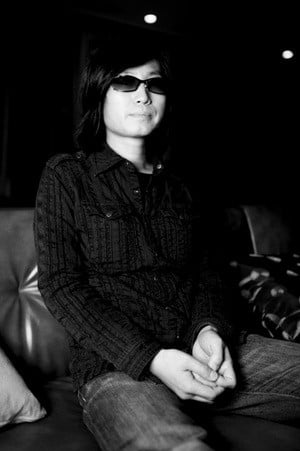
Meeher's approach to level design helps explain why Metal Slug feels so carefully paced. He spoke about the difference between games built around checkpoints and games built around immediate respawning, and about the extra demands of simultaneous two-player action. A level that works for one player can feel very different when two people are firing, jumping, dying, reviving, and collecting items at the same time. The screen needs room for both players to read danger, but it also needs enough threat to keep the arcade rhythm alive. Metal Slug became famous for chaos that still feels legible: bullets, vehicles, prisoners, explosions, enemies, and background jokes all share the same stage. That balance did not happen by accident. It came from designers who understood how arcade players move through space, how they recover after mistakes, and how a cabinet has to keep attention moment by moment.
In The Hunt is the clearest earlier step toward Metal Slug's vehicle-heavy imagination. Kujo had the idea for that underwater shooter while taking a nap in a park. The underwater setting gave the team a way to make familiar shooting ideas feel new. Kujo has described talking with visual artists about details such as how a missile should look when it launches in water, how the flow around it should behave, and how the environment itself could respond. That kind of thinking is easy to see later in Metal Slug, even though the setting moved from submarines and water to tanks, soldiers, snowfields, cliffs, bridges, and battlefield camps. The important link is not only machinery. It is the pleasure of making machinery feel heavy, animated, and a little theatrical.
The original tank-only Metal Slug followed naturally from that background. In The Hunt had slower, weightier combat built around a vehicle, and Nazca first tried to push that idea onto land. The team spent about 18 months building the first version, with the player controlling only the combat vehicle. On paper, that made sense. The tank was expressive, memorable, and central to the project. In practice, it caused trouble. Nazca took the game to two location tests, and players did not respond well. Location tests were vital for arcade development because they showed what people actually did with a machine when money, time, noise, and public attention were all part of the experience. The answer was hard for the team to ignore: the game in its first completed shape was not connecting.
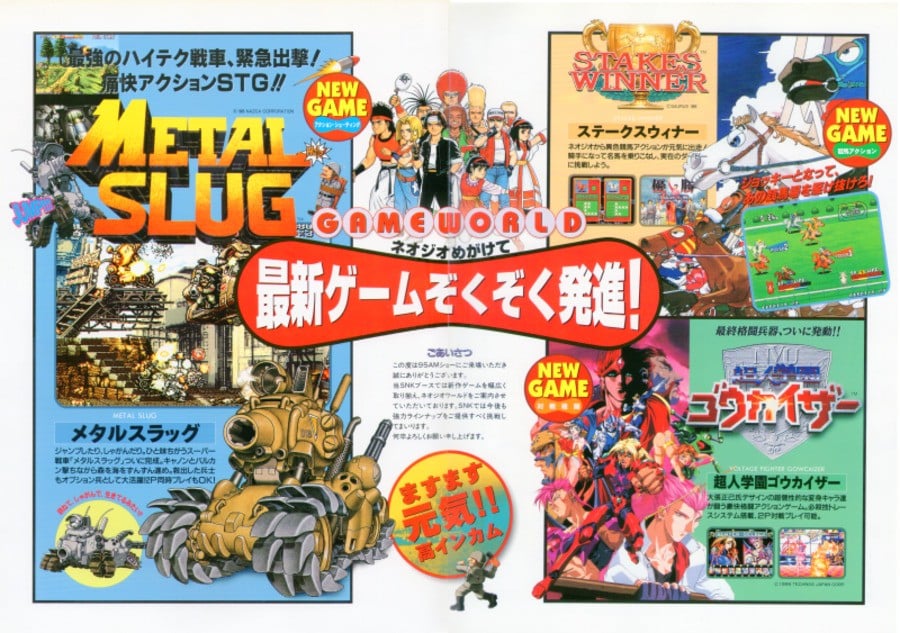
Kujo later described the biggest challenge as changing the player character structure. The combat vehicle had been the only thing under direct control, but after those tests, Nazca moved the soldiers to the center of the game. Some stage sections were remade, though Kujo did not claim to remember every detail clearly. He also explained the design problem in simple terms. Tanks and submarines were not the same. A submarine in In The Hunt could move through water in a way that made sense for that game's pacing. A tank, by contrast, was harder to handle as the sole player character in a side-scrolling action game. Watching real players struggle during testing made that clear. Management and many staff members still wanted the tank to remain the star, but Kujo felt the game needed a controllable character who could move more quickly and flexibly.
That decision created tension because it touched the identity of the whole project. The tank was not just another feature. It was the Metal Slug itself. Moving soldiers into the leading role meant changing the feel, the rhythm, and the appeal of the game. It also meant a painful amount of extra work. The redesign added roughly six more months to development after the earlier 18-month build. During that period, the main characters had to be drawn, animated, and integrated. The stages needed rebalancing. Enemy placement, movement speed, weapon use, and the role of the tank all had to be adjusted around human characters who could run, jump, crouch, shoot in different directions, and die in a more immediate way. What sounds like one design choice was really a full rebuild of the arcade experience.
Some of the known changes show how deep the revision went. The opening stage was lengthened because the human soldiers moved faster than the original vehicle concept allowed. The start of the third stage changed even more dramatically. It had once been a horizontal walk through a snowy forest, but it became a vertical mountain climb. That kind of alteration is not just cosmetic. A horizontal snow route and a vertical ascent ask different things from the player, the enemy layout, the camera, the pacing, and the art team. The final Metal Slug benefits from this change in energy. The game rarely lets one idea sit too long. It moves from military camps to vehicles, from open ground to climbs, from small infantry moments to large mechanical spectacle, and the soldiers make those shifts easier to stage.
Programmer Shinichi Hamada later described a scrapped level for Bitmap Books, adding another glimpse of how much material changed as Metal Slug found its final form. Kujo's later comments in Bitmap's book did not overturn what he had already said in earlier interviews, but they gave a stronger sense that the redesign was not a neat, comfortable process. Across several conversations, the story became clearer piece by piece. The team had built a tank-led game, watched it underperform in public testing, argued or at least disagreed over how central the tank should remain, and then worked through a difficult half-year to reshape the entire project around Marco and Tarma. The famous tank survived, but in a more interesting role: not the only body the player had, but a powerful machine that could enter and leave the action like a prize, a weapon, and a character all at once.
What The Redesign Changed
- The player focus moved from the Metal Slug tank alone to human soldiers, with Marco and Tarma becoming the main controllable characters.
- The tank stayed important, but its role changed from sole hero to a special combat vehicle inside a broader run-and-gun structure.
- Stages had to be adjusted around faster human movement, including a longer opening stage and a rebuilt start to stage 3.
- The development schedule grew by about six months after an 18-month tank-focused version received poor location-test reactions.
- The final game kept Nazca's love of machines, heavy animation, and arcade spectacle while giving players a more responsive way to move through each scene.
Looking back, it is striking that Kujo did not expect Metal Slug to become a long-running series. The first game feels so confident now that it is easy to imagine the sequels were always waiting. But its creation was more uncertain than that. It came from a new studio formed by former Irem staff, from a design that first placed all its weight on a tank, from public tests that exposed a problem, and from a difficult revision that made the game faster and more approachable without losing its mechanical charm. Z-retro's view is that Metal Slug's history is a useful reminder that classic games can come from sharp craft and messy course correction at the same time.