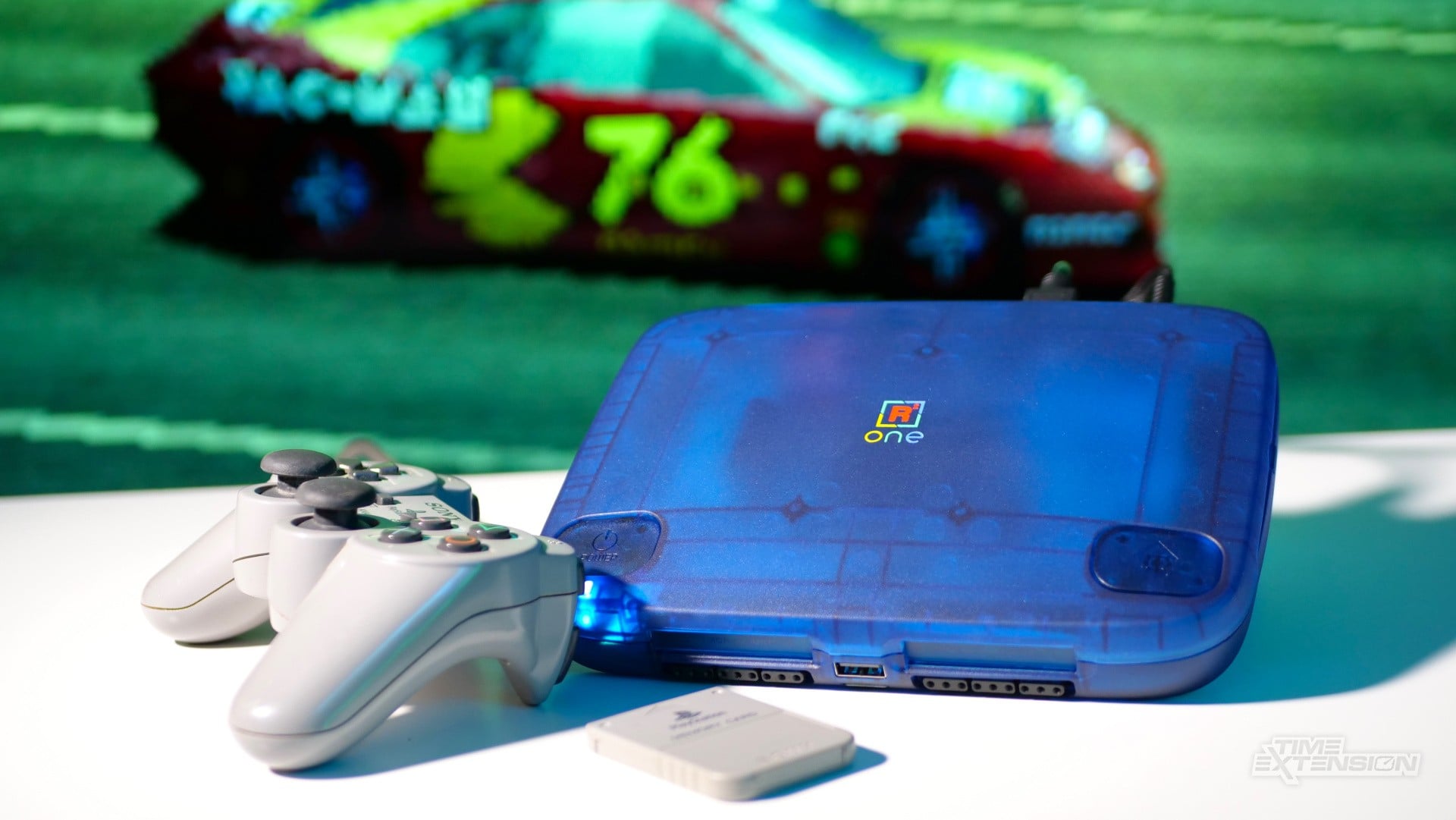
The SuperStation One is interesting because it does not fit neatly into one familiar retro hardware box. It looks like a small PlayStation-inspired console, but Time Extension's review makes clear that it is really a broader FPGA machine built around the MiSTer world. That means it is aimed at players who want more than a basic plug-and-play nostalgia device, but who may also want something neater and more console-like than a typical MiSTer setup.
Created by Taki Udon, who is also behind the MiSTer Pi, the SuperStation One was reviewed as a $210 system. Its pitch is built around a mix of accuracy, physical compatibility, and old display support. It uses FPGA cores, supports HDMI, and also includes legacy video output options such as VGA, RGB, S-Video, Component, and Composite. It can also work with original PlayStation accessories through the SNAC module, including controllers, memory cards, and light guns.
Retro Context
Modern recreations of older consoles have taken several different paths. Some official mini consoles from major companies have used software emulation, which can be convenient and affordable, but often separates the experience from original games, controllers, and display setups. Other devices focus more on hardware-style recreation or FPGA designs, where the goal is to reproduce the behavior of old systems at a lower level than a normal emulator. For retro players, that can matter because the feel of timing, input, video output, and accessories is often part of the appeal.
The SuperStation One sits close to that FPGA side of the scene, but its shape changes the message. A standard MiSTer build can be powerful, flexible, and community-driven, yet it may also feel like a hobby board first and a living-room console second. By placing the idea into a PSOne-shaped case, the SuperStation One makes the hardware easier to understand at a glance. It borrows the visual language of a familiar Sony console while still reaching beyond PlayStation through the wider MiSTer-style platform.
What Time Extension Found
Time Extension described the system as compact and solid, with a transparent blue review unit and a grey option for those who want a look closer to classic PlayStation hardware. The case design matters because it lowers the friction for players who like the idea of FPGA gaming but do not enjoy the physical mess of boards, add-ons, and exposed hobbyist hardware. It is still a specialist device, but it presents itself more like something meant to stay connected beside other consoles.
Notable Hardware Points
- FPGA cores are used instead of relying on standard software emulation.
- HDMI is included alongside legacy AV options such as VGA, RGB, S-Video, Component, and Composite.
- Original PlayStation controllers, memory cards, and light guns are supported through the SNAC module.
- A 24-bit digital-to-analog converter helps support older display connections.
- Built-in Bluetooth, WiFi, and NFC are included.
- Original PS1 media support is planned through the optional SuperDock, according to the source review.
The old-video side is one of the most important details. Many retro players still use CRT televisions or other older displays because those screens can make classic games look and feel closer to how they were originally played. The SuperStation One is designed with that audience in mind rather than treating analog output as an afterthought. There is a practical warning, though: the 10-pin mini DIN socket may resemble a Sega Saturn-style connector, but Time Extension notes that Retro Gaming Cables has said it is subtly different. Buyers should not assume an existing cable will fit or work correctly.
The PlayStation accessory support gives the system a stronger identity than a generic FPGA box in a themed shell. Being able to use an original DualShock pad or an old memory card is not only a nostalgic detail; it can preserve a player's existing habits and saved progress. Light gun support is also notable, though any light gun setup depends on having the right surrounding display and hardware conditions. The larger point is that the SuperStation One is trying to respect the physical side of PlayStation collecting, not just the software library.
There are still setup caveats. Time Extension notes that the system ships with open-source BIOS files for platforms that need them, and that a BIOS checker helps users see what is present or missing. A quick setup guide is available through a QR code included in the box. That should help newcomers, but this is still not the same as a closed, fixed mini console. It belongs to the MiSTer-style world, where cores, files, and update paths matter. The review also says the cores loaded on the system have been adjusted for the SuperStation One's legacy AV features, with those changes expected to move into the main MiSTer distribution later.
Performance is presented as matching the MiSTer FPGA experience, with the platform supporting systems up to and including Saturn and N64. That is a broad claim in practical terms, because it means the SuperStation One is not only for PlayStation fans. At the same time, the article's strongest confirmed value is not raw system count; it is the way the hardware combines FPGA play, real PlayStation accessories, analog video, and a friendlier case. Time Extension also noticed that the unit can get a little warm because it lacks the internal fan usually seen in MiSTer and MiSTer Pi setups, while noting that support for active and passive cooling has been confirmed.
Why It Matters
For a retro reader, the SuperStation One matters because it tries to make a serious FPGA setup feel less like a project. It is still for people who care about details, but it reduces some of the distance between modern FPGA hardware and the console experience people remember. The practical value is strongest for players who want both modern and older display options, who already own PlayStation controllers or memory cards, or who have been curious about MiSTer but wanted a more finished-looking device. The caveat is that buyers should treat it as its own platform for now, pay attention to cable compatibility, and understand that optional features such as original disc support depend on separate hardware.
Z-retro View
The SuperStation One looks like one of the more sensible attempts to bring FPGA retro gaming closer to normal console use. Its appeal is not that it replaces every other route into old games, but that it balances accuracy-minded hardware with the small physical details that make retro play feel personal. The safest view is to see it as a promising MiSTer-based console with useful PlayStation-focused touches, not as a magic replacement for original hardware or a simple plug-and-play toy. For the right audience, that middle ground is exactly what makes it worth watching.