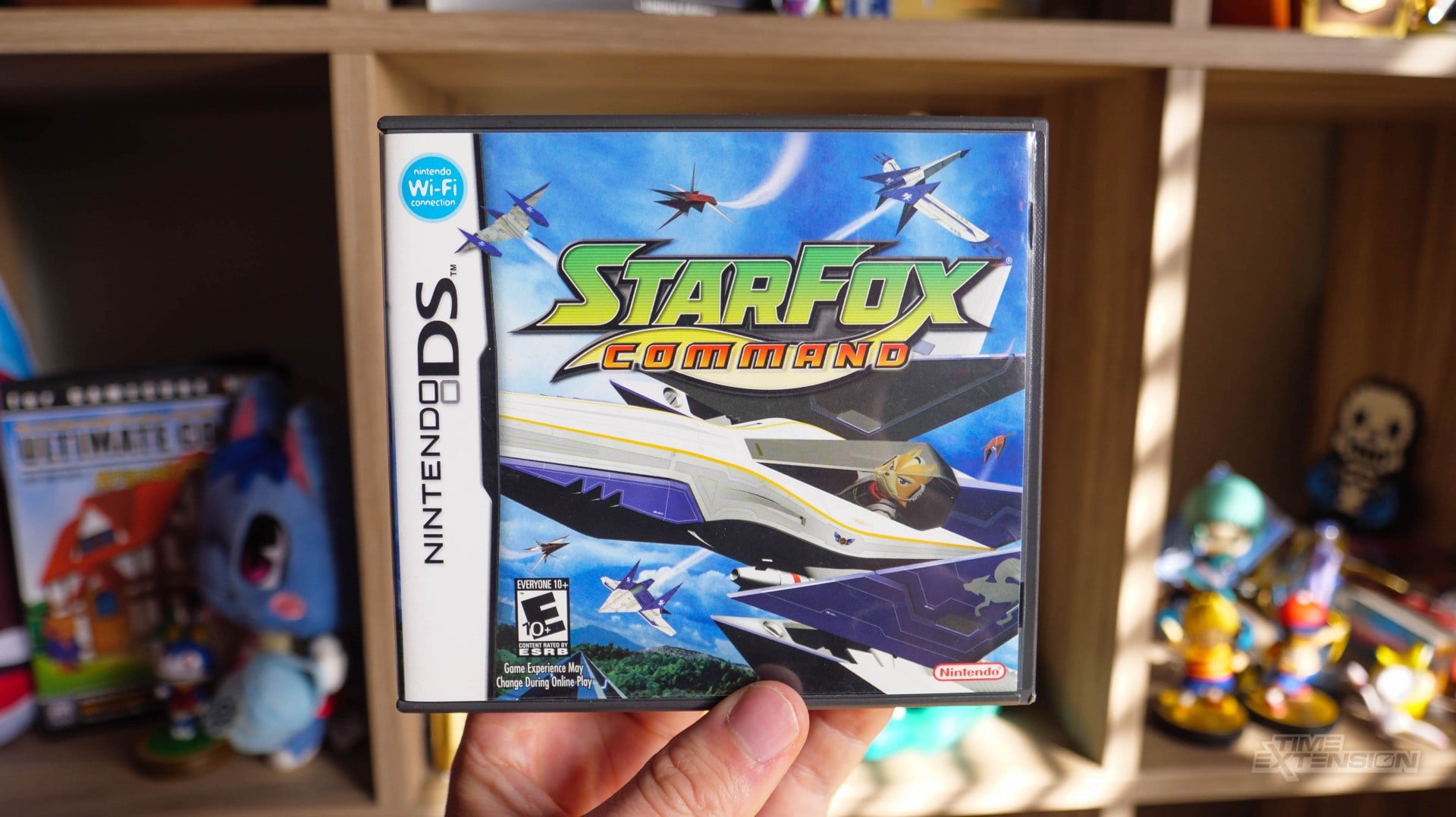
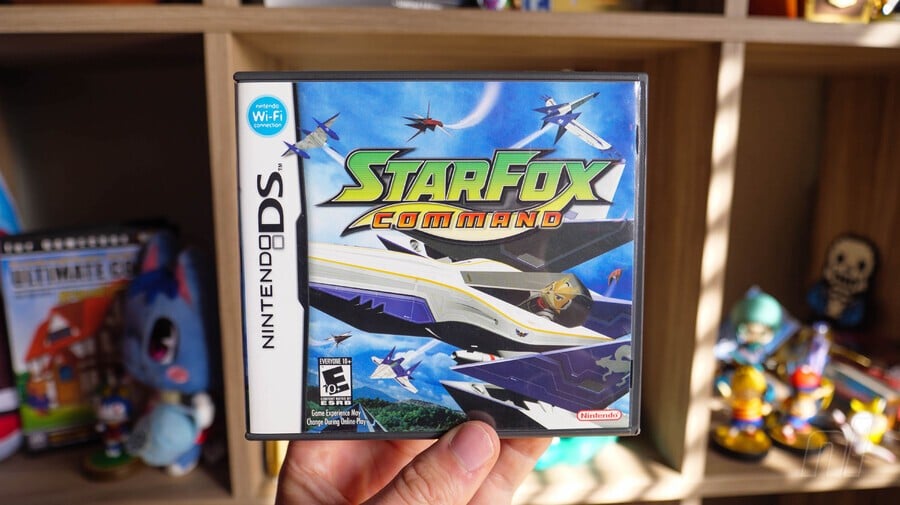
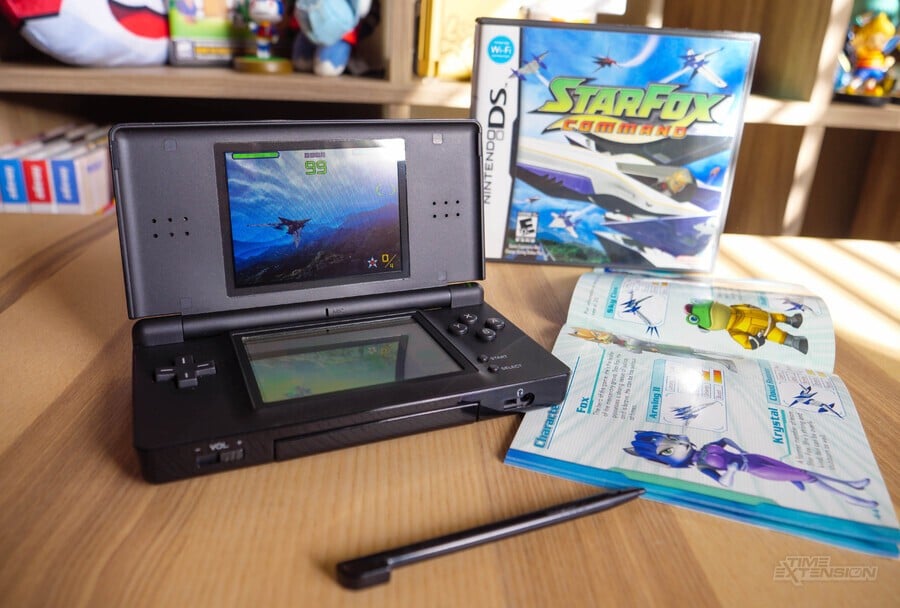
The surprise return of Star Fox to the conversation makes Star Fox Command worth another careful look. It sits in a strange and interesting place in Nintendo history. It was Fox McCloud's first handheld adventure, a Nintendo DS game from 2006, and a project that tried to move the series forward instead of simply rebuilding the past. That was exciting, but it also came with pressure. Star Fox had once been a showcase for Nintendo hardware, the kind of series people used to explain what a machine could do. By the time Command arrived, some fans were unsure where the series was heading. The DS, with its two screens, stylus, microphone, wireless features, and unusual control ideas, gave Nintendo and Q-Games a chance to treat Star Fox as an experiment again.
The series had already lived through several very different moments. The original Star Fox on SNES helped Nintendo step into 3D, using a special graphics chip that made the console feel more advanced than many expected. Star Fox 64 did not need extra hardware, but it still turned into a strong visual statement for the Nintendo 64, with graphics that stood proudly beside rival machines of the time. Then came the GameCube years, where things became less settled. Star Fox Adventures had begun life as a different Rare project before the Star Fox world was placed around it. Star Fox: Assault, made by Namco, opened strongly but leaned into ground missions and multiplayer in a way that disappointed some players. Command had to answer all of that history while also proving that Star Fox could work on a small dual-screen handheld.
That concern softened when Q-Games became part of the project. The Kyoto studio was led by Dylan Cuthbert, whose connection to Star Fox went all the way back to the original game and the unreleased SNES sequel Star Fox 2. That mattered. Nintendo had recently trusted outside teams with the series, but Cuthbert was not an outsider to its early spirit. After Star Fox 2 was cancelled, he left Nintendo's orbit, worked at Sony America on Blasto for PlayStation, then returned to Sony's Japanese side and created the well-known Duck in a Bath PlayStation 2 technology demo. He also contributed to Ape Escape 2001, a Japan-only release, before founding Q-Games in Kyoto in September 2001. The studio was close to Nintendo in more ways than geography.
Q-Games was meant to work across platforms, but Cuthbert quickly rebuilt a working relationship with Nintendo. Before Star Fox Command, the studio had already approached Nintendo with experiments and games, including Digidrive, also known as Intersect. There were other playful ideas too, including projects that used the Game Boy gyro, though some of them never reached players. Then Shigeru Miyamoto asked Q-Games to create a Star Fox concept demo for the coming Nintendo DS. The team spent a couple of months building a space-elevator style demo that felt close to the original Star Fox. They even changed the appearance of the characters and team for that early version, but the visual direction changed when the project moved into full production and Takaya Imamura was assigned as producer.
Miyamoto's interest in Command was tied closely to Star Fox 2. He had worked with Cuthbert on that cancelled SNES game, and he wanted some of its ideas explored properly. At that point, very few people outside Nintendo knew much about Star Fox 2, and even Imamura had not been directly involved with it. Cuthbert was one of the few people who understood what had been tried there. For Miyamoto, Star Fox was not only a brand about Arwings and familiar faces. It was also a place to test ideas in 3D play. Cuthbert later described Miyamoto's view as one where Star Fox should not repeat the same sequel structure forever. The DS, with two displays and fresh input methods, looked like the right machine for another round of exploration.
That helps explain why Command moved away from the simple on-rails shape many fans associated with the series. It was not a casual decision, especially after Adventures and Assault had already made some players miss the focused flight action of the earlier games. But the DS was new ground. Touchscreen phones were not yet part of everyday life in the way they would become later, and the idea of controlling a 3D action game with a stylus still felt open and unusual. Q-Games studio manager Takahashi Akito, who joined the company straight from university, remembered the project as a fresh daily challenge. The aircraft could be steered with the stylus, rolls could be triggered with a swipe, and the hardware encouraged design ideas that had not been common on earlier consoles.
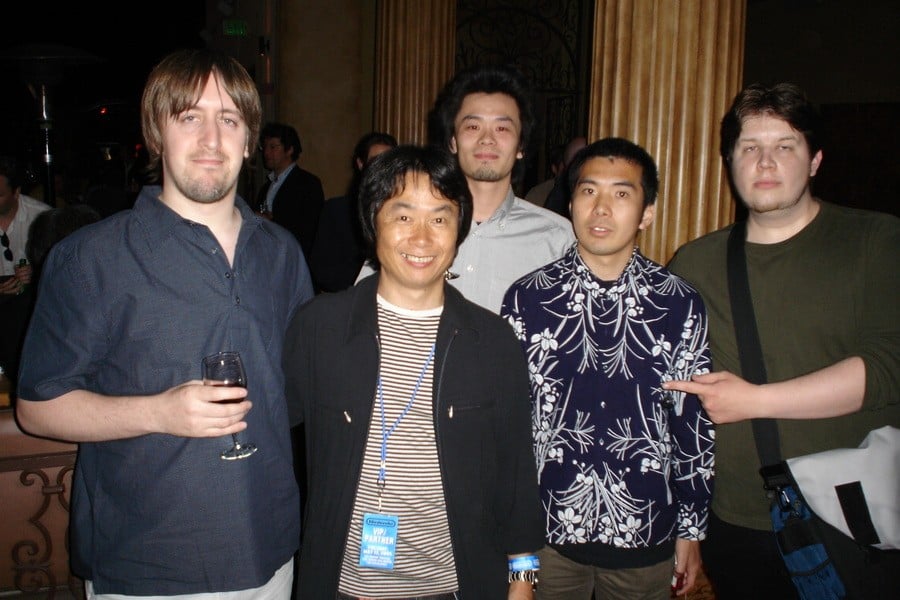
Rhodri Broadbent joined Q-Games around the same period after working at Lionhead on Fable, and he remembered early development as unusually free. The team tested many ideas for controls and cameras, including some that were wild and some that worked beautifully but still had to be cut when production needed focus. Broadbent programmed the Arwing controls and especially liked one removed idea where the player could hold the stylus over an enemy to keep the camera locked on, while the Arwing moved around the target automatically. That would have let players study weak points or plan an attack with a different rhythm. He later noticed that some of the unused concepts found a kind of second life in Star Fox Zero.
The team also worked hard on the strategy layer, where players drew routes and guided the flow of each turn. Cuthbert was fond of using the DS Rumble Pak to make route drawing through meteor fields feel physical. The group adjusted the strategy and path creation again and again, trying to make it fun rather than simply functional. Audio had its own limits. Nintendo's sound team suggested using the player's own voice or sounds, cutting them up to create the character voices. Because Command was a smaller handheld game, Nintendo decided early that there would not be enough cartridge space for many real voice samples. The solution became a technical compromise that suited the machine, the budget, and the portable format.
Although Command was an outsourced project, it was not a distant one. Q-Games and Nintendo were both in Kyoto, and the collaboration was close. Cuthbert remembered Imamura being in the Q-Games office every day, while Miyamoto and Katsuya Eguchi also visited the team. Q-Games handled the development work, apart from the music and audio engine. Broadbent described Nintendo's role as especially active during pre-production, when the team was testing many touch-panel control schemes and receiving feedback. Miyamoto gave comments during that stage and helped shape some of the final control ideas. Once the main direction was set, Q-Games carried most of the development, with Cuthbert as director and Imamura of Nintendo EAD as producer.
Imamura's presence gave the project a strong link to Nintendo's older creative culture. He had joined Nintendo in 1989 and had credits on F-Zero, The Legend of Zelda: Majora's Mask, and the original Star Fox. He worked with the Command team on enemy design, game feel, and story paths, while Hajime Wakai composed the music. For several Q-Games staff members, working beside Imamura was a personal highlight. Kazushi Maeta remembered hearing stories from him and listening to him play guitar during breaks. Before Maeta joined Q-Games, Imamura had once given him an autograph with a drawing of Slippy, without Maeta knowing that they would later work together. Yutaka Kurahashi also remembered the experience warmly, including dinners and conversations about cars and hobbies.
There was also a lighter office memory involving Cuthbert's French Bulldog, Pooh-chan, who served as the company mascot at the time. Q-Games was a shoe-free office, so visitors took their shoes off near the entrance. One day, Imamura arrived with a nice new pair of suede shoes and left them by the door. The smell caught Pooh-chan's attention, and the dog marked them. Cuthbert remembered the team feeling deeply embarrassed, while Imamura handled it with good humor. It is a small story, but it says something about the working atmosphere around Command. This was a Nintendo project with serious expectations, yet it was also built inside a compact Kyoto studio where people, pets, prototype ideas, and daily collaboration all mixed together.
Command also became the first Star Fox game to use online play, which was a major step for the series. The DS made wireless and internet features feel new and exciting, but the tools around online development were still young. Cuthbert said the team wanted to capture the thrill of a dogfight, but getting the online systems working took longer than expected. During part of that work, the air conditioning in the office broke in the middle of summer, making an already hard task even more uncomfortable. Broadbent was not on the network coding side, but he remembered that keeping players synchronized caused real stress for some team members. Online multiplayer arena battles were ambitious for the time.
The design challenge was not only technical. Flight combat has a common problem: two players can rush past each other too quickly, then spend too much time turning around to find the target again. In a small arena, that can feel clumsy. Command used the DS lower screen to soften that problem. The map helped players read an opponent's direction, plan wider approaches, and track power-ups. That meant battles were not only about chasing and shooting. Players could also think about the best route, where to intercept, and which weapon pick-ups to grab before rivals reached them. The lower screen turned the fight into something more readable, which fit the game's wider interest in strategy and planning.
One of Command's most lasting ideas was its use of multiple endings. Cuthbert connected this to old branching adventure books, including the Fighting Fantasy style of making choices and reaching different outcomes. While the team was searching for a larger structure to hold the game together, he suggested branching paths to Imamura, who embraced the idea and put a lot of energy into the story routes. The format gave Star Fox's characters more room than a fixed path would normally allow. Maeta remembered Imamura enjoying the creation of the endings, even suggesting that a sequel could follow one of those branches. Kurahashi also recalled Imamura looking happy while drawing them.
One ending, known as Curse of Pigma, showed Fox McCloud in a low place after losing Krystal and turning to racing. That branch later became part of wider talk around the idea of a Star Fox racing game. Cuthbert said he did not know about that rumor directly, but he liked the light crossover feeling because Imamura had also been behind F-Zero. Broadbent saw it as a natural alternate path, since Imamura had deep ties to both Star Fox and F-Zero. In a story where Fox and Falco changed careers, high-speed racing made sense. It was another example of Command letting the series loosen its shape and imagine versions of its cast that would not fit inside a single straight campaign.
Star Fox Command launched in Japan on August 3, 2006, in North America on August 28, 2006, and in Europe on January 26, 2007. Reviews were favorable and sales were reasonable, with 20,000 copies sold on the first day in Japan. Even so, the team could still see things they might have changed. Cuthbert would have liked more traditional forward-scrolling Star Fox stages if time and direction had allowed it, but Miyamoto wanted the team to stay with free-range modes as part of the project's experimental purpose. He also wished the mothership sequence had been expanded with more variety and perhaps an on-rails section inside it. Maeta said the Arwing transformation from Star Fox 2, later revived in Star Fox Zero, almost appeared in Command too.