Kenji Kaido's game career reaches back to the late 1980s, a period when arcade hardware was changing quickly and Japanese studios were chasing bigger, louder, more physical ways to pull players into a screen. His name is attached to a wide range of projects: at Taito, he worked as designer and director on arcade titles such as Bonze Adventure and Sonic Blast Man, while PlayStation players may know him through credits including Ape Escape as designer and Tomba as producer.
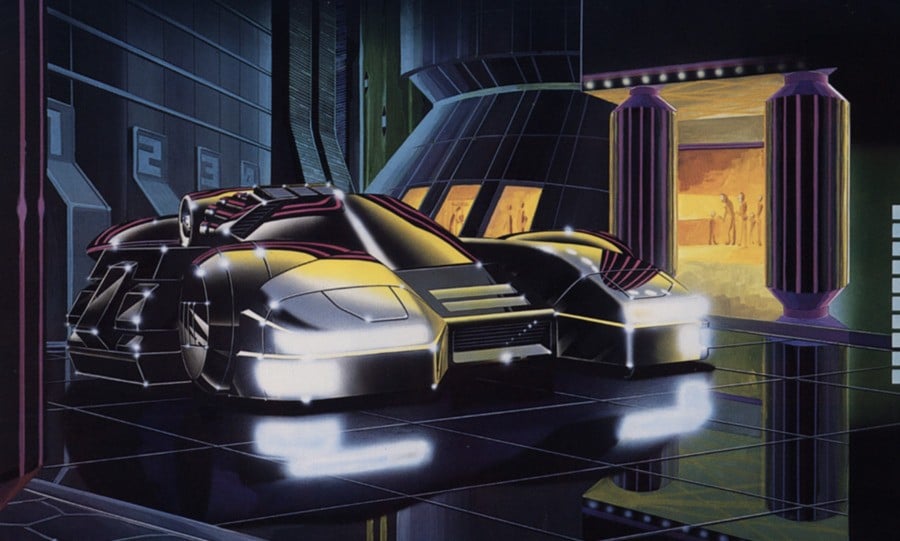
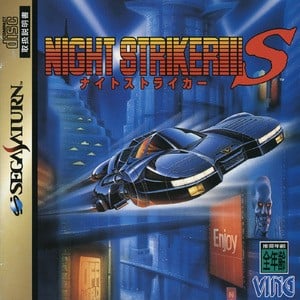
One of his most striking early works is Night Striker, the 1989 Taito arcade game he designed and directed. With Operation Night Strikers being prepared for a western release by Clear River Games and Limited Run Games at the time of the Tokyo Game Show 2025 conversation, Kaido had a rare chance to look back at the game in detail. It had been 36 years since Night Striker first appeared, and even by the standards of late-'80s arcade excess, its mix of speed, shooting, and neon science fiction still carries a very specific mood.
Before Night Striker
Kaido's path into professional development was already moving before Taito. He had made a game as an amateur developer while he was still a university student. His first official game after that was Bonze Adventure, not Night Striker. The order around his early releases is a little tangled because Night Striker and Champion Wrestler were developed at the same time. Kaido believes Champion Wrestler probably reached release first, which would make Night Striker possibly his third officially released game.
That detail matters because Night Striker can feel like the work of someone already deeply settled into arcade design, yet it came early in Kaido's professional life. It was made at a moment when large moving cabinets were a major point of attraction. Sega's After Burner and Out Run had helped make the idea of an arcade machine as a ride feel modern and exciting, and Taito wanted something in that broad family: a large-scale operation game that could use physical movement as part of its appeal.
A Cabinet Looking For A Game
At the beginning, the basic hardware idea came before the final game concept. Taito already had a tube-shaped cockpit in mind, and the plan involved a cabinet that could spin. Management asked Kaido to design a game around that mechanism. His first answer was not the Night Striker people remember today, but a science-fiction racing game built around tube-shaped tracks. The concept matched the shape of the machine: if the player was sitting inside a tube-like cabinet, then racing through tube-like courses made a clear kind of arcade logic.
The project already had several fixed pieces. There was a case, a cabinet, and a board. The motherboard was not new; it had already been used in games such as Continental Circus and Chase HQ. In other words, Kaido was not starting with an empty page. He was working inside a real arcade production frame, with a known board and a cabinet direction already chosen. Then the moving parts became a problem. The hardware needed for the cabinet's motion was too expensive to manufacture, so the manufacturer stopped, and the whole project was expected to be cancelled.
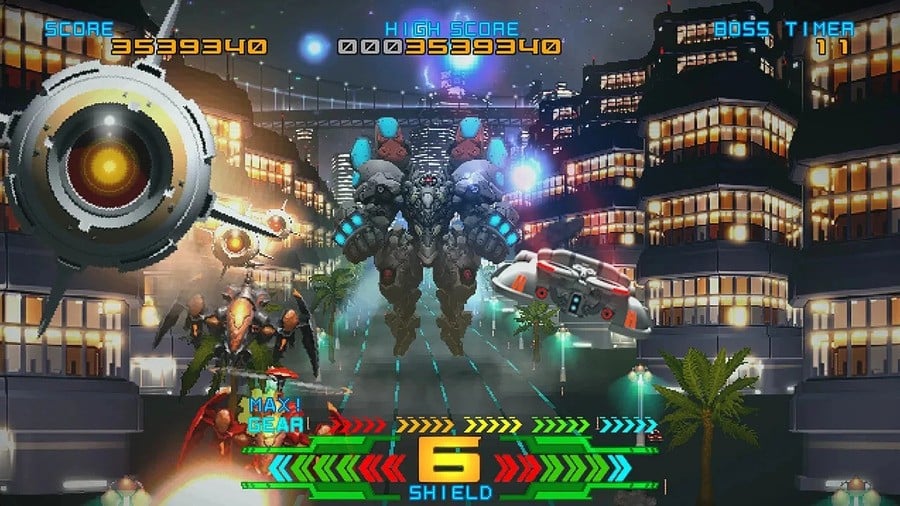
From Racing To Shooting
Kaido had written a planning document for the racing version and brought it to his boss. That boss had worked on Crazy Balloon and an early Lupin the Third game, and his question changed the project. He asked whether the game could fire bullets or missiles. Kaido agreed, because he felt shooting would be more fun. At the time, he liked Space Harrier, so the direction shifted toward a shooting game in that spirit. A machine that had begun as a sci-fi racer was now becoming a forward-moving arcade shooter.
Kaido joked that it was lucky his boss did not suggest a game about hunting animals or karate fighting. The point is playful, but it also shows how open the project still was. Night Striker's identity was not locked from the start. It came from a set of practical limits, a cabinet that could no longer do what was first imagined, and a conversation about what kind of action would actually feel good to play. The result kept the sensation of rushing forward, but changed the player's role from racer to armed pilot.
The Games And Films Behind The Feel
When Kaido talked about influence, he named Space Harrier and the Star Wars arcade game. For film atmosphere, Blade Runner was part of the picture. Knight Rider, despite the easy surface connection people might imagine with fast night driving and sleek machines, was not really an influence for him because he did not watch it much. That leaves Night Striker sitting in a clear late-'80s arcade lane: bold screen movement, science-fiction city mood, and a desire to make 3D space readable in the heat of play.
Space Harrier was especially important because Kaido saw it as revolutionary. He paid attention not only to the spectacle, but to the way the game handled shooting. In a normal 3D setup, the screen has a vanishing point, and objects moving away from or toward the player are processed around that center. If a bullet strictly follows that 3D logic, it travels toward the vanishing point in the middle of the screen. That creates a problem: enemies near the edge become much harder to hit, even when the player's eye and hand feel like they are aiming correctly.
Making 3D Feel Playable
Kaido noted that Space Harrier avoided that frustration by letting shots fly straight rather than fully obeying the vanishing-point behavior. It was a practical arcade choice, not a dry technical exercise. A player standing in front of a cabinet does not care whether a bullet is mathematically pure if it makes the game feel wrong. He also noticed another useful design lesson: when several enemies are lined up, a missed shot can still connect with something. That kind of arrangement helps the player feel active and successful, even inside a fast and chaotic screen.