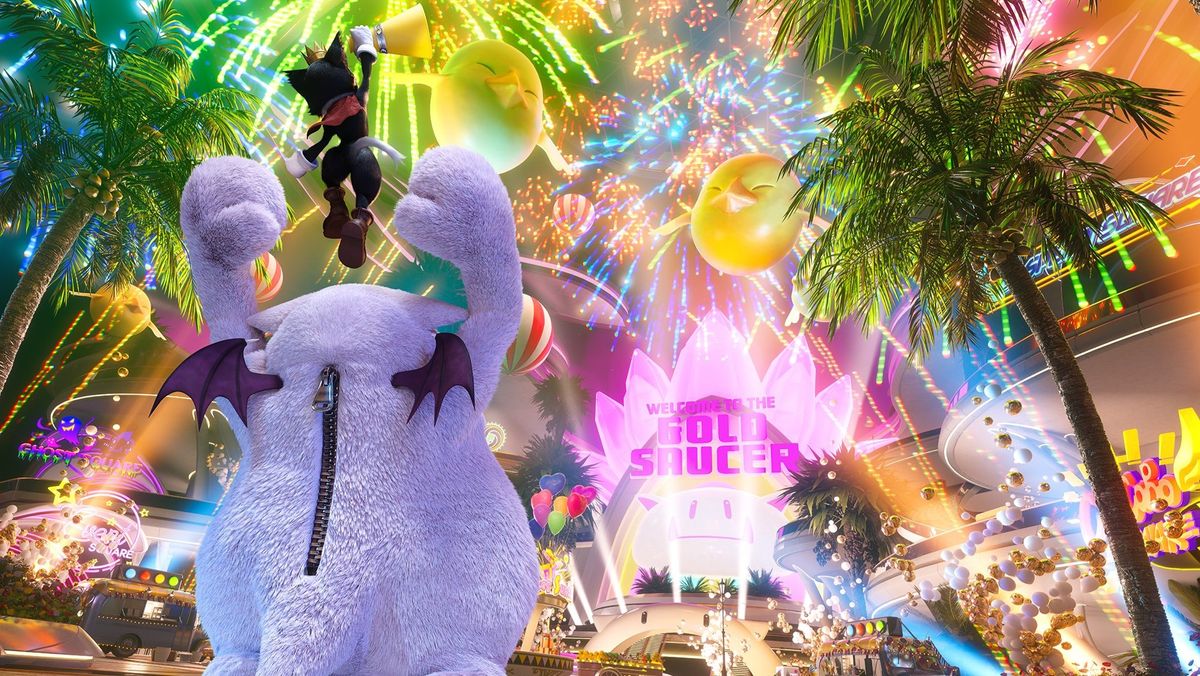
Final Fantasy 7 Rebirth has no shortage of side activities. Queen’s Blood, Fort Condor, Chocobo Racing, Galactic Survivors and Pirate’s Rampage all offer a change of pace from the main adventure. That variety has also brought a familiar complaint: there can seem to be a lot of mini-games between the player and the next story moment.
For some players, that interruption is part of the fun. A match or challenge can create a short pause in the main quest and make the world feel like somewhere to spend time, rather than a route straight from one plot point to another. Others may not enjoy every activity, especially when one asks for more concentration or skill than they want to give it. Rebirth has room for both reactions.
Retro Context
The debate connects to the original Final Fantasy 7 from 1997, whose playful mini-games helped give its world texture. Rebirth expands many of those ideas into more fully developed activities, while carrying forward the spirit of the earlier game’s goofy diversions. For a series built around a large RPG journey, these moments add another way to experience its setting and characters beyond the critical path.
That connection helps explain why simply counting activities may not tell the whole story. A mini-game can be a callback, a world-building pause, or a self-contained challenge. Rebirth’s versions are generally more fleshed out than their 1997 counterparts, but that does not mean every player will want to spend the same amount of time with them. The old-school appeal is in the variety; the modern question is how that variety feels to play.
Why It Matters
Naoki Hamaguchi, who leads the Rebirth project, says the useful question is not whether a game should have more mini-games or fewer. In comments to Edge Magazine, he frames the decision around what kind of experience suits a particular title. That shifts the discussion from a raw tally to design: do the activities fit the game, and are they enjoyable in the context where they appear?
Hamaguchi also says the team aimed to make the games easy to engage with and to avoid unnecessary stress. The stated priority was for players to take part because they wanted to, rather than because they felt forced. That matters for anyone who likes the world but does not enjoy every challenge. The more demanding activities are generally optional and are not required for the critical path, according to the source material.
The distinction is useful when deciding how to approach Rebirth. Players who like collecting and mastering side activities can spend time with the expanded selection. Those who mainly want to follow the central story can focus on that route without treating every diversion as homework. The menu of activities can still feel abundant, but optionality gives players some say over the pace and shape of their journey.
Z-retro View
Rebirth’s mini-games are part of a long-running RPG tradition: a big adventure makes room for smaller, stranger pastimes along the way. Their expanded form may be a welcome nod to the 1997 game for some players and a detour for others. Both responses can be true. Hamaguchi’s emphasis on fit and player choice offers a practical way to judge them: do they add something to this particular world, and can players opt in without undue pressure?
That balance also sits alongside a larger decision about the trilogy. Hamaguchi has described making each game a complete experience as non-negotiable from the beginning. In that context, side activities help give Rebirth a range of things to do within its own entry, while the main story remains its route through the larger project. Whether a player loves Queen’s Blood or skips it, the presence of these diversions reflects a deliberate effort to make each installment feel substantial on its own.