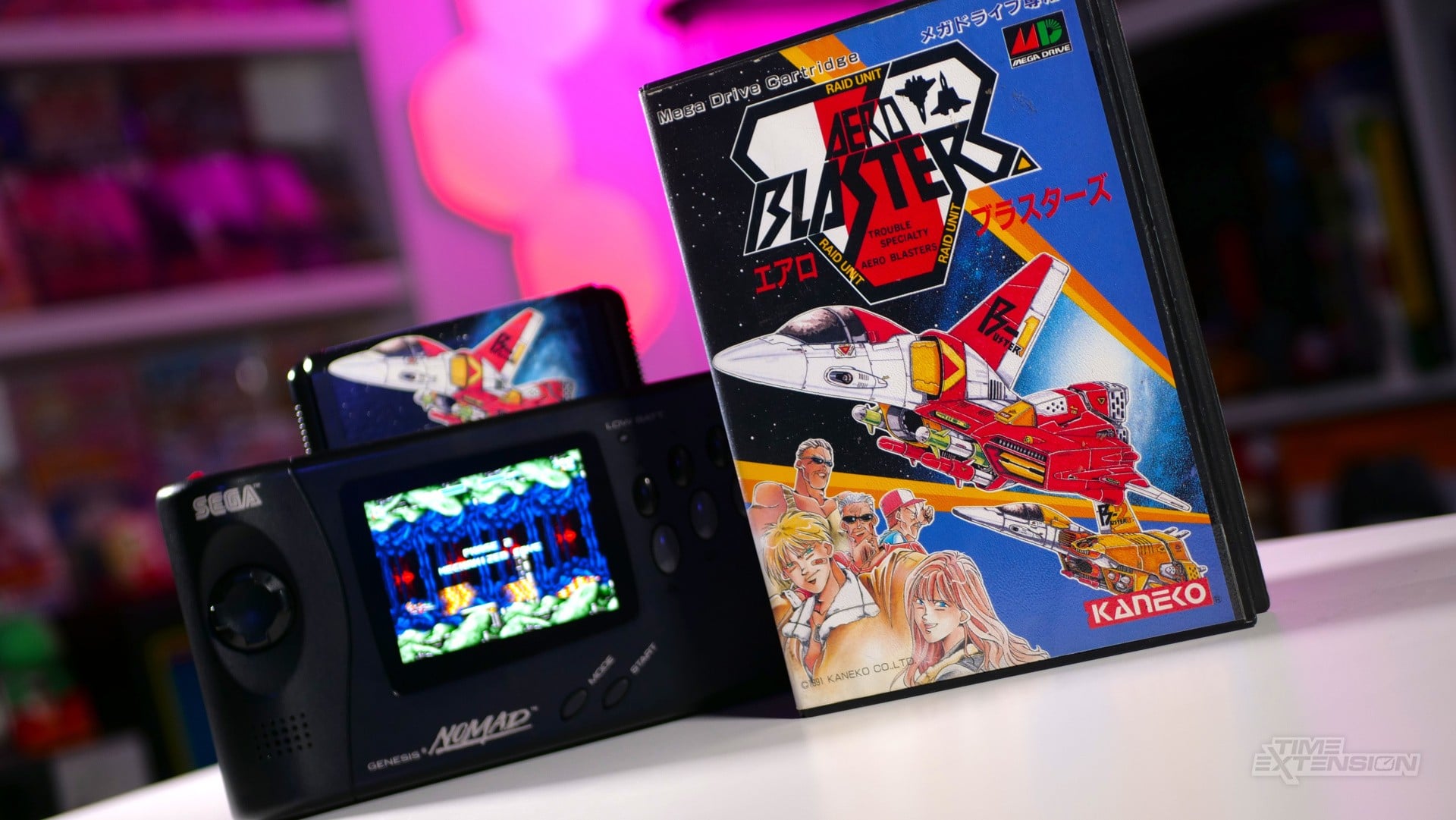
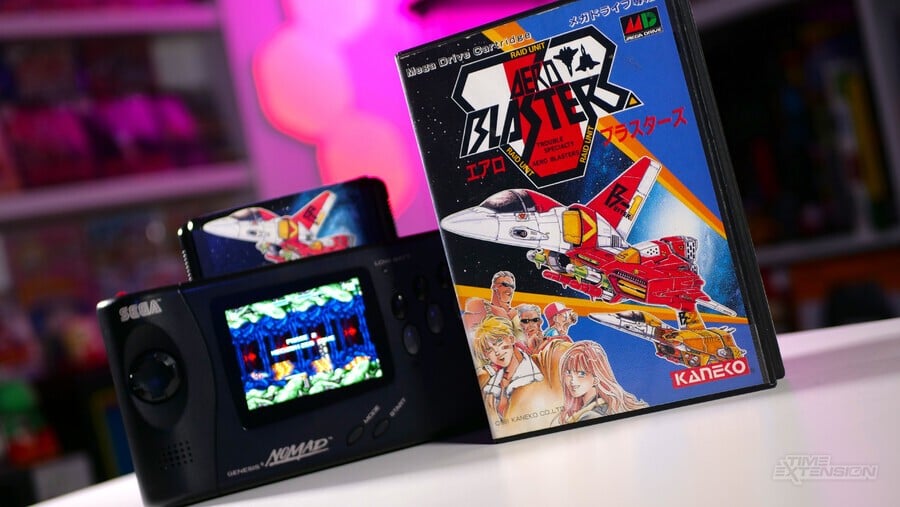
Kaneko's Aero Blasters, known as Air Buster in some regions, is one of those Mega Drive shooters that comes with more than one kind of memory attached. The Japanese cover alone has a strong claim as one of the system's great pieces of box art, but the game itself is the real reason it still stands out.
Before the Mega Drive arrived, home versions of arcade games were already familiar territory for many players. The Atari ST, for example, had no shortage of coin-op conversions, though the results could vary quite a bit. That made the idea of arcade games coming home exciting, but also a little uncertain.
When the Mega Drive entered the picture at the end of 1990, some famous Sega titles felt like console games first. Golden Axe, Strider, and Super Monaco GP were played at home before their arcade origins were fully understood, at least from a young player's point of view.
Only later, after seeing those same games in local arcades, did their earlier coin-op life become clear. Because of that order of discovery, there was no strong habit of comparing the Mega Drive versions against the original cabinets. They had already made their first impression on Sega's 16-bit machine.
Aero Blasters was different. The arcade cabinet appeared in a local pub and restaurant, found while waiting for a family lunch to finish. It was immediately familiar because it had recently appeared in Mean Machines magazine, creating that small but memorable flash of recognition.
That recognition quickly turned into something more practical: the Mega Drive version seemed remarkably close to the arcade game. For a player who had just seen the cabinet in person, that mattered. The home port did not feel like a distant echo; it felt like the same fast shooter brought back into the living room.
The copy that came first was the North American Air Buster, bought from KC's Computer Emporium in Loughborough, UK. Its cover art was far weaker than the Japanese release, but that did not spoil the purchase. What mattered most was how closely the cartridge matched the arcade experience that was still fresh in mind.
Years later, around the close of the millennium, the Japanese version joined the collection after being picked up from CeX's short-lived retro store in London. That edition, with its much stronger artwork, became the treasured copy and remains the one associated with the game today.
The appeal has lasted because Aero Blasters still feels impressive as a conversion. Returning to it from time to time keeps that old comparison alive: a coin-op shooter, a Mega Drive cartridge, and the surprise of finding how closely the two could line up.
Damien McFerran has written professionally about technology and video games since 2007, and his long-running interest in gaming history gives this kind of memory extra context. Aero Blasters is not only a cartridge on a shelf; it is part of a wider story about how arcade games shaped home console collections.
Z-retro's view: Aero Blasters is a useful reminder that a good port is not only about technical accuracy. Sometimes the lasting charm comes from timing, place, cover art, and the feeling that the arcade followed you home.