
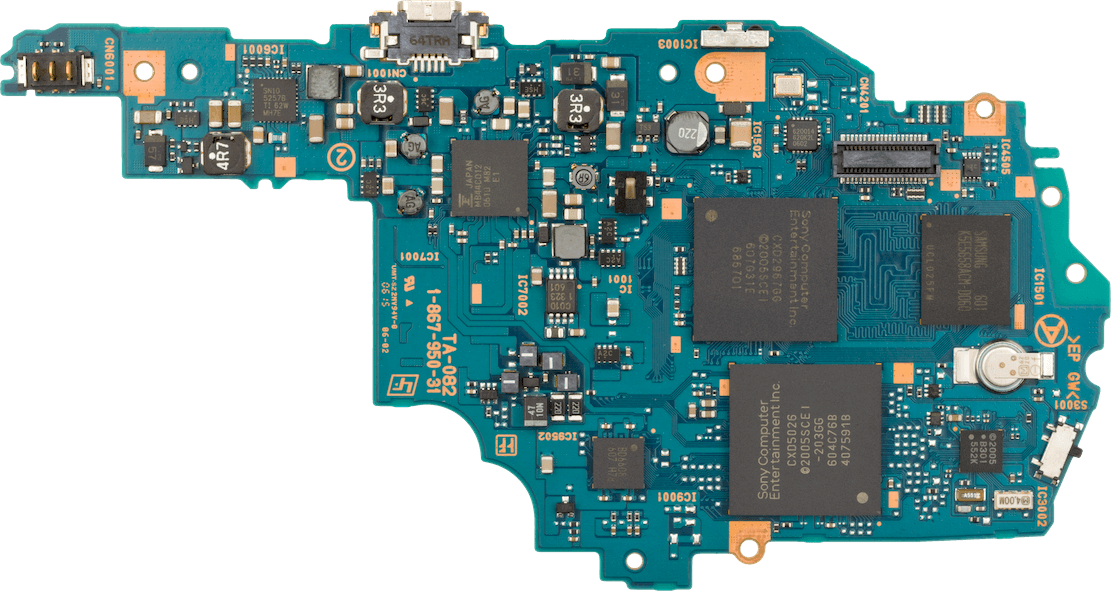
The PSP is often remembered as a handheld built around one main processor, but its hardware has another MIPS core: the Media Engine, or ME. Developers in the PSP scene have known about that second core for a long time. What has been harder is getting it to work reliably and understanding the less familiar hardware around it. Developer m-cid is now digging further into those questions, sharing research and tools that make this part of the PSP more approachable.
The ME was not completely unknown to early PSP developers. Scene tinkering, including work by crazyc on the ps2dev forums, had already shown that code could run on it. But those experiments came with limitations, in part because important details such as a hardware spinlock were not yet understood. On Sony’s original, unmodified firmware, the ME was also out of reach from user mode: only the kernel could communicate with it and run code there. Its main job was multimedia work, including decoding formats such as MP3, AT3, JPEG and MPEG. That role helps explain why the chip matters, while the access limits help explain why turning it into a general homebrew tool took more investigation.
Why It Matters
A second core is interesting on paper, but usable tools are what let more developers put it to work. The research highlighted by m-cid includes custom-core and safe-task projects, alongside a closer examination of the VME, short for Virtual Mobile Engine. The VME is described as a co-processor for the ME that provides the power needed for real-time audio and video decoding. It is unusual and much less documented than the ME itself, so examining its bitstream and datapath adds another piece to the PSP’s hardware picture. The source also points to successful ME use in projects such as the Perfect Dark port, with more discussion planned separately. For homebrew makers, that combination of practical libraries and real project use is more useful than hardware trivia alone: it offers a path from understanding the chip to trying it in software.
Z-retro View
The PSP’s second core is a good reminder that familiar consoles can still have corners the community has not fully mapped. Earlier developers established that the ME could run code, while newer work is taking on the restrictions and missing knowledge that made it difficult to use. The VME adds another layer to that story, especially for anyone interested in how the handheld handled media. It is too early to treat every technical question as settled, but the projects and documentation give curious developers concrete material to study. Readers can explore the work at github.com/mcidclan/psp-media-engine-custom-core, github.com/mcidclan/psp-media-engine-safe-task and the VME bitstream and datapath notes in the psp-media-engine-cracking-the-unknown repository.