A Saturn Treasure From Japan
By the late 1990s, the console fight between PlayStation, Nintendo 64, and Sega Saturn had already taken a hard turn. In the West, Sega's machine was losing ground badly by 1997, while Sony's 32-bit console had become the safer bet in most places. Japan was different. The Saturn stayed alive there for longer, and that extra life gave it a library full of games that many players in North America and Europe never saw in stores.
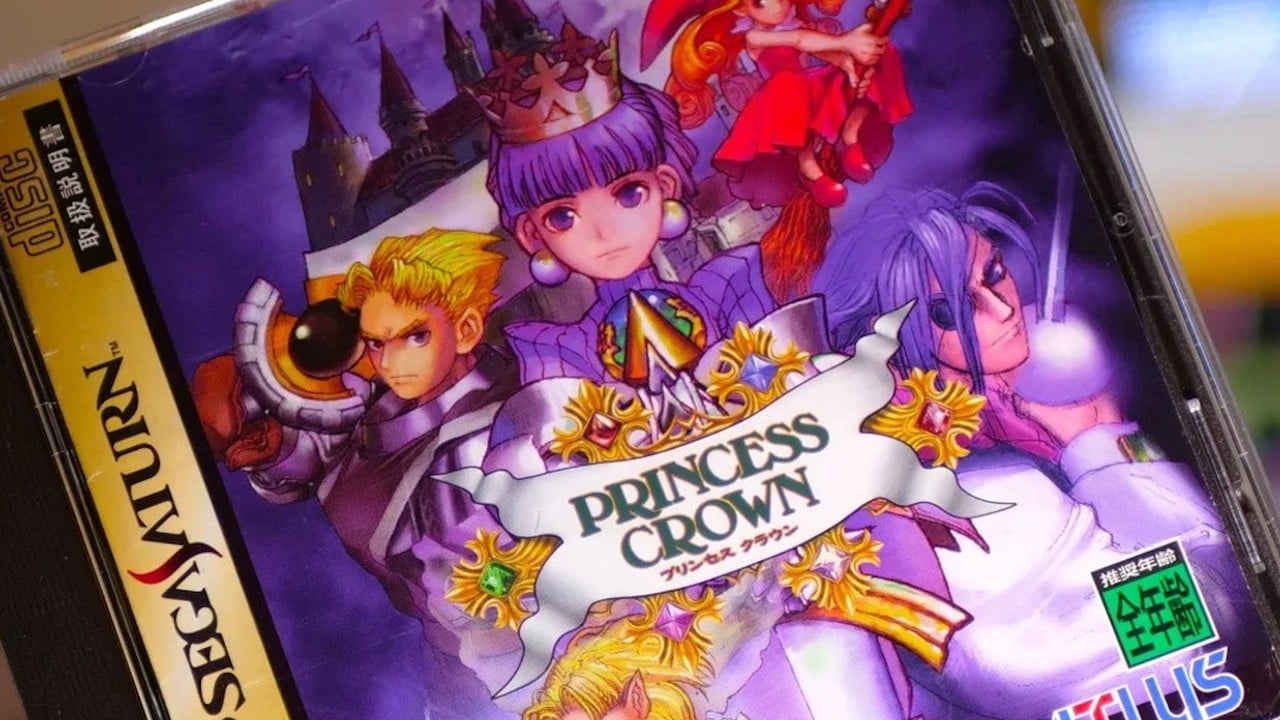
Princess Crown is one of those games. For a lot of Saturn fans outside Japan, it was the kind of title you learned about through magazine previews, import shops, and word of mouth. It stood out because it looked so rich and carefully drawn, yet it also carried the familiar frustration of the era: the Saturn had more good games than many people realized, but only a small portion of them were being localized for Western players.
It is hard to say whether a game called Princess Crown could have changed the Saturn's fortunes against heavyweights such as Final Fantasy VII and Metal Gear Solid. What is much easier to say is that it belongs near the top of the system's library. It is graceful, odd, bright, and mechanically sharper than its fairy-tale surface first suggests. Thanks to the fan translation community, English-speaking players can now approach it with far less guesswork than before.
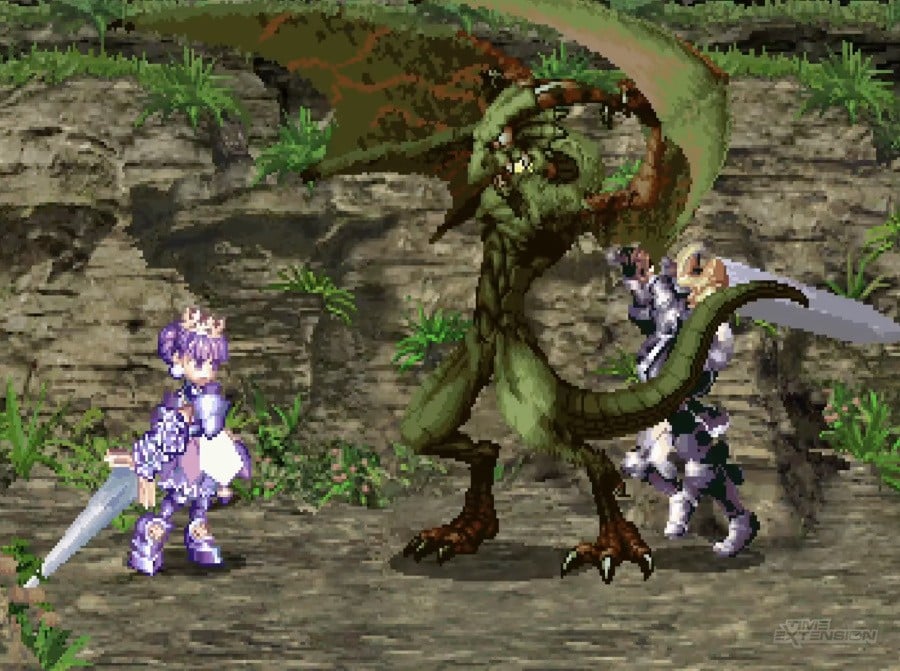
George Kamitani's First Lead Role
Princess Crown also matters because it marks George Kamitani's directorial debut. Before this game, Kamitani had worked at Capcom. Later, his name would become closely linked with lavish 2D games such as Unicorn Overlord, Muramasa: The Demon Blade, Odin Sphere, and Dragon's Crown. The connection is easy to feel here. Odin Sphere and Dragon's Crown are often viewed as spiritual successors, and Princess Crown already carries the same love for hand-crafted fantasy, side-view action, and layered storytelling.
How The Adventure Flows
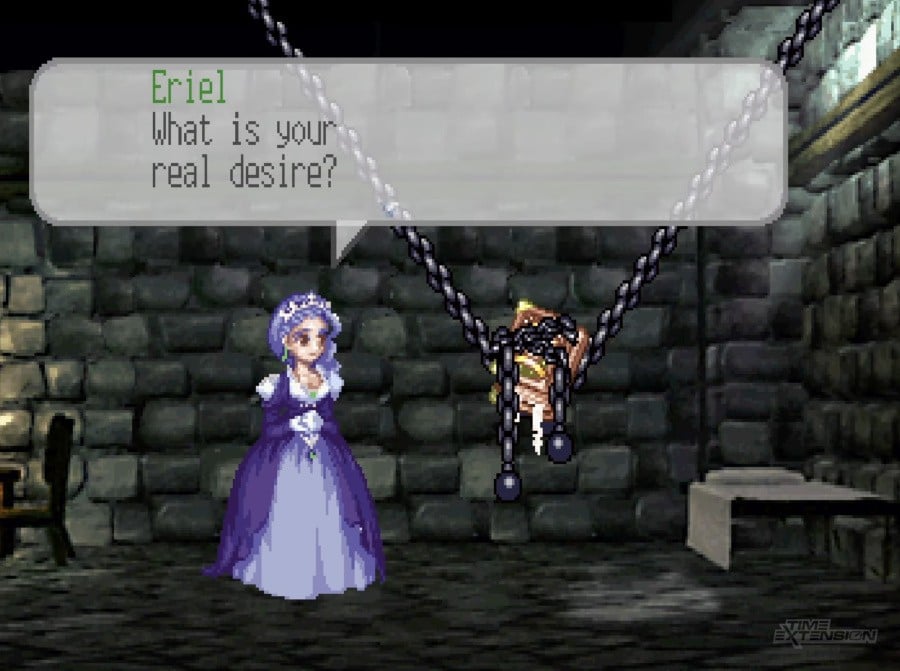
The game is shown from a side-on view, but it is not a simple side-scroller. Movement across the world uses a node-based map, letting you travel between towns, villages, and other locations. In settlements, you can speak with NPCs, shop for items, and save your progress by staying at inns. Travel between points happens in real time, and that is where most battles appear. The result feels part traditional Japanese RPG and part action adventure, with the world opening through routes, conversations, and repeated journeys.
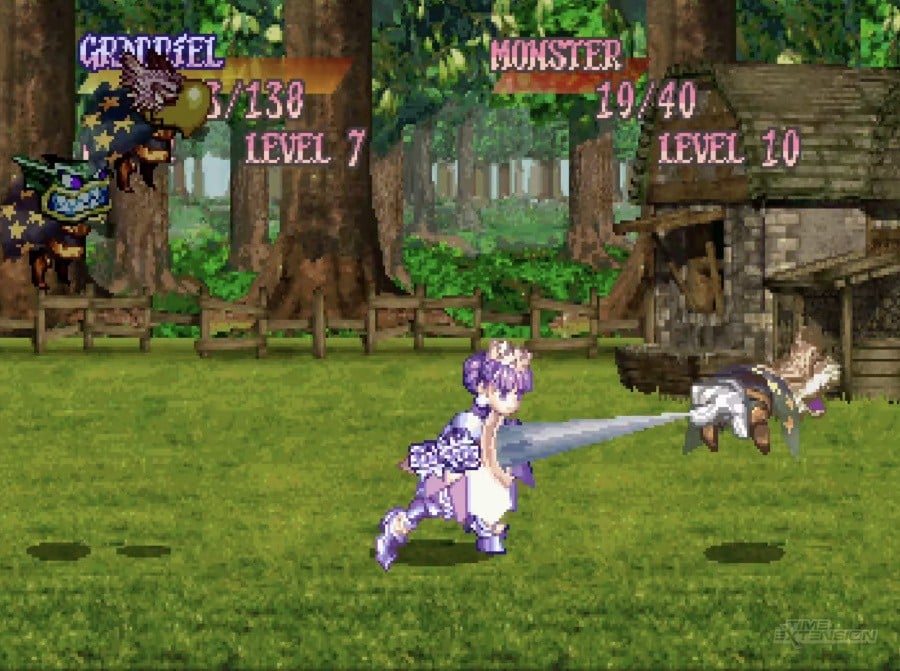
When an enemy appears, the side view stays in place and the game shifts into combat. The basic controls are easy to understand, but they have more bite than they first show. You can build simple attack strings and finish them with a heavier strike by holding the attack button. There is a limit, though. Your Power bar drops when you attack or block, and if it runs dry, your character has to pause briefly to recover. That small pause can be dangerous, especially when an enemy is ready to punish you.
Blocking is handled by pushing backward during an enemy attack. With better timing, you can press the B button just as the opponent begins to strike, bringing up a choice that lets you step away or move around them. On paper, Princess Crown mostly asks you to use attack and evade, but the system is broader than that. Aerial blows, dashing stabs, and rising attacks all have a place, so fights can become more about spacing, stamina, and timing than simple button pressing.
Items Make Battles More Interesting
Items are a major part of the rhythm. Healing food such as fruit or cooked meat restores health, and fruit has a clever extra use. Once a piece is fully eaten, it leaves behind a seed. That seed can be thrown in battle, where it grows into a tree and produces more fruit. If you have a frying pan and the right ingredients, you can also cook dishes that restore more health. Ideas like this would later feel familiar to anyone who played Odin Sphere in 2007.
Those recovery options become more important as the enemies grow stronger. Princess Crown does let you make the road easier through experience. Defeating enemies earns points, and leveling up increases both life and damage output. It is possible to grind when the challenge starts to press too hard, which gives the game a useful safety valve without removing the need to learn its combat habits.
Equipment adds another layer. Magical boots let you pick up items in combat without pressing down, while a special shield can hurt enemies with fire when you block. These tools are extremely useful, but they are not permanent comforts. Gear can break. Magic jewels give you access to attacks such as fireballs and lightning, while scrolls can protect equipment from breaking during battle. The game keeps pushing you to think about what to carry, when to spend it, and when to save it.
Action, RPGs, And Fighting Game Spark
Princess Crown feels like a blend of classic Japanese RPG structure and Zelda II-style side-scrolling action, with a small touch of Street Fighter flair. Heavy finishing blows give battles a dramatic flash, recalling the way Super Street Fighter II Turbo celebrates a victory with a Super Special. The combat can become a little repetitive because the move set is accessible and fairly direct, but that never fully gets in the way. The pace is brisk, the systems keep feeding into each other, and the presentation makes even familiar encounters pleasant to watch.