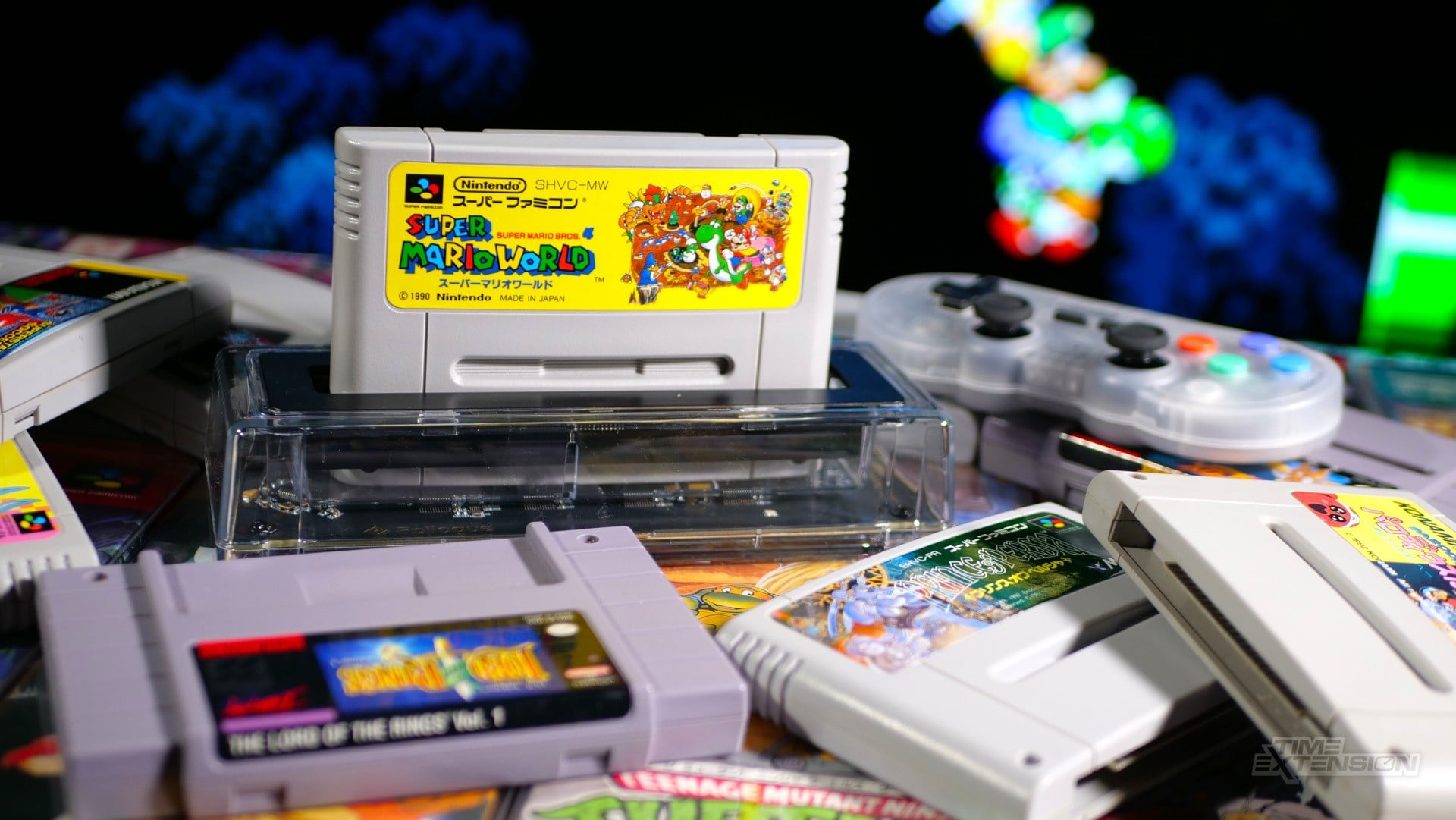
Epilogue has already made a name for itself with the GB Operator, a small device that lets Game Boy owners play their original cartridges on a computer, dump ROM files for personal use, and back up save data from their own collections. The Romanian company is now applying that same idea to Nintendo’s 16-bit library with the SN Operator, a $60 cartridge reader built for Super Nintendo and Super Famicom games.
The appeal is easy to understand if you still keep real cartridges on a shelf. Instead of hunting for ROMs online or setting up a loose emulator folder, the SN Operator turns the cart you already own into the starting point. You insert the game, connect the reader to a computer, and use Epilogue’s Playback app to identify, launch, dump, or back up the cartridge. It is a modern bridge for an old library, and it is designed to make the process feel less like a technical workaround.
A Familiar Clear-Shell Design
The SN Operator follows the look of the GB Operator. It is made from transparent plastic, so the circuit board is visible in that late-90s gadget way that still suits retro hardware nicely. A rubberised base helps it stay put on a desk, which matters more than it sounds when you are pushing a large cartridge into a small reader. There is also an LED that shows when the unit has power, and connection is handled through the included USB-C cable.
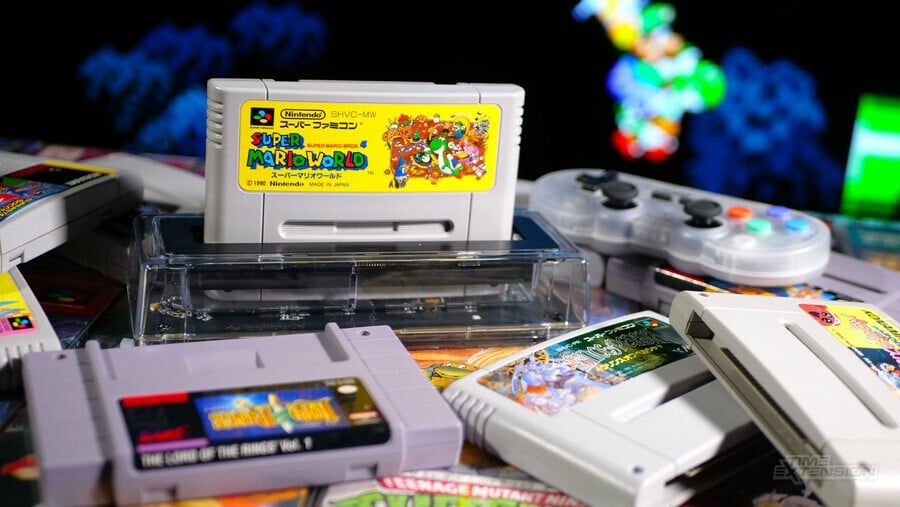
The tested unit was the Founder’s Edition, which adds a few extras for early buyers. It has additional text on the circuit board and comes with a pin badge and a sticker. Those touches are nice for collectors, but the hardware itself is otherwise the same as the standard SN Operator. In practical terms, the special edition does not change how games load, how saves are handled, or how the device works with the Playback software.
Playback Keeps Things Simple
Epilogue uses the same Playback app that powers the GB Operator. If both devices are connected at the same time, the app includes a toggle for switching between them, which is a thoughtful detail for anyone already using Epilogue’s Game Boy reader. The software is a big part of the SN Operator’s identity because it wraps common emulation tasks in a cleaner, more approachable interface than many standalone emulator setups.
Once a cartridge is inserted, Playback checks the game against its internal database. When it finds a match, it presents box art and a description, giving the experience the feel of a small digital library rather than a bare file picker. From there, you can dump the ROM to your computer for personal use or back up the save data stored on the cartridge. For collectors, that save backup feature may be just as valuable as the ability to play the game, especially with older carts whose batteries and memories are not getting any younger.
bsnes At The Core
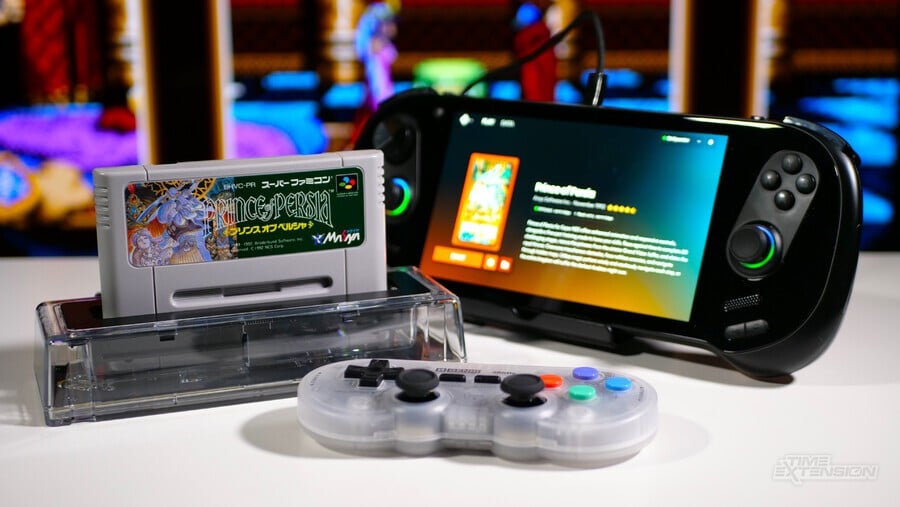
Starting a game through Playback loads bsnes, the well-regarded Super Nintendo emulator that Epilogue officially supports through the SN Operator and its app. That choice gives the device a strong foundation, because bsnes is already a known name among people who care about accurate SNES emulation. Epilogue does allow users to boot other SNES emulators if they prefer, but those alternatives may not work perfectly with Playback, so bsnes is clearly the intended route.
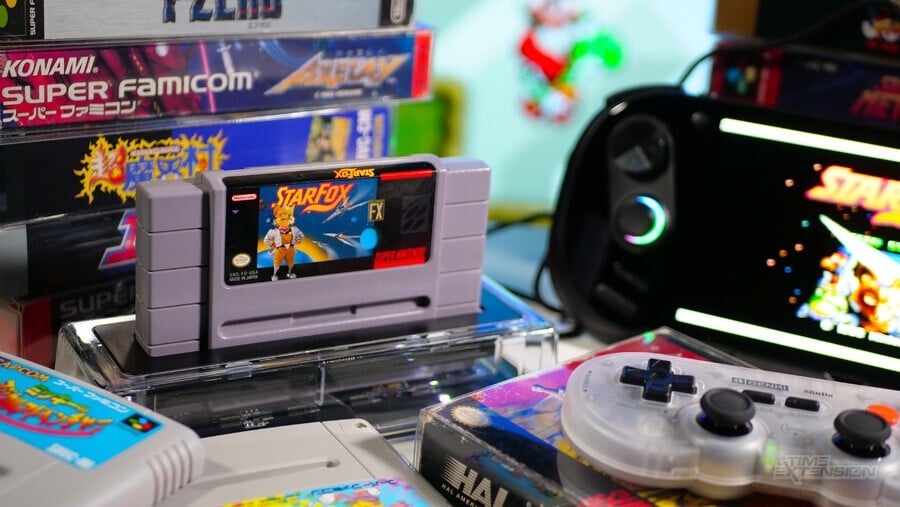
The setup also includes familiar emulator-style enhancements. Mode 7 effects can be adjusted, including the option to increase the resolution of Mode 7 surfaces in games such as F-Zero and Pilotwings. Longtime SNES emulation fans will already know many of these tricks, but the point here is not that Epilogue invented them. The strength is that Playback makes these options feel like part of one tidy experience, instead of asking the user to dig through scattered settings or remember where every configuration menu lives.
Strong Results With Original Cartridges
Testing covered North American SNES cartridges, European SNES cartridges, and Japanese Super Famicom cartridges, and all of them worked without issue. That is important because the SNES family has always had regional variations in branding, shape, and release history. The SN Operator’s ability to handle games from all three major regions gives it a broader collector appeal, especially for people who have built a library from imports as well as local releases.
The device also handled more unusual old software. A review copy of Konami’s J-League Perfect Eleven, originally connected to the 1990s Nintendo magazine scene in the UK, loaded successfully. That kind of result is encouraging because it suggests the SN Operator is not limited only to the most obvious retail carts in perfect database conditions. For anyone with oddities, samples, or less common cartridges, smooth handling of a review copy is a useful sign.
Modern Cartridges Are Less Certain
The main problem appeared with newer SNES releases. Bitmap Bureau’s Xeno Crisis was not recognised by Playback’s internal database and would not load. Retro-Bit’s reissue of Majūō: King of Demons hit the same wall. These are not original-era cartridges, and at the moment they show the edge of what the SN Operator can reliably support. The hardware and app may be polished, but recognition still depends on the database and software support around it.