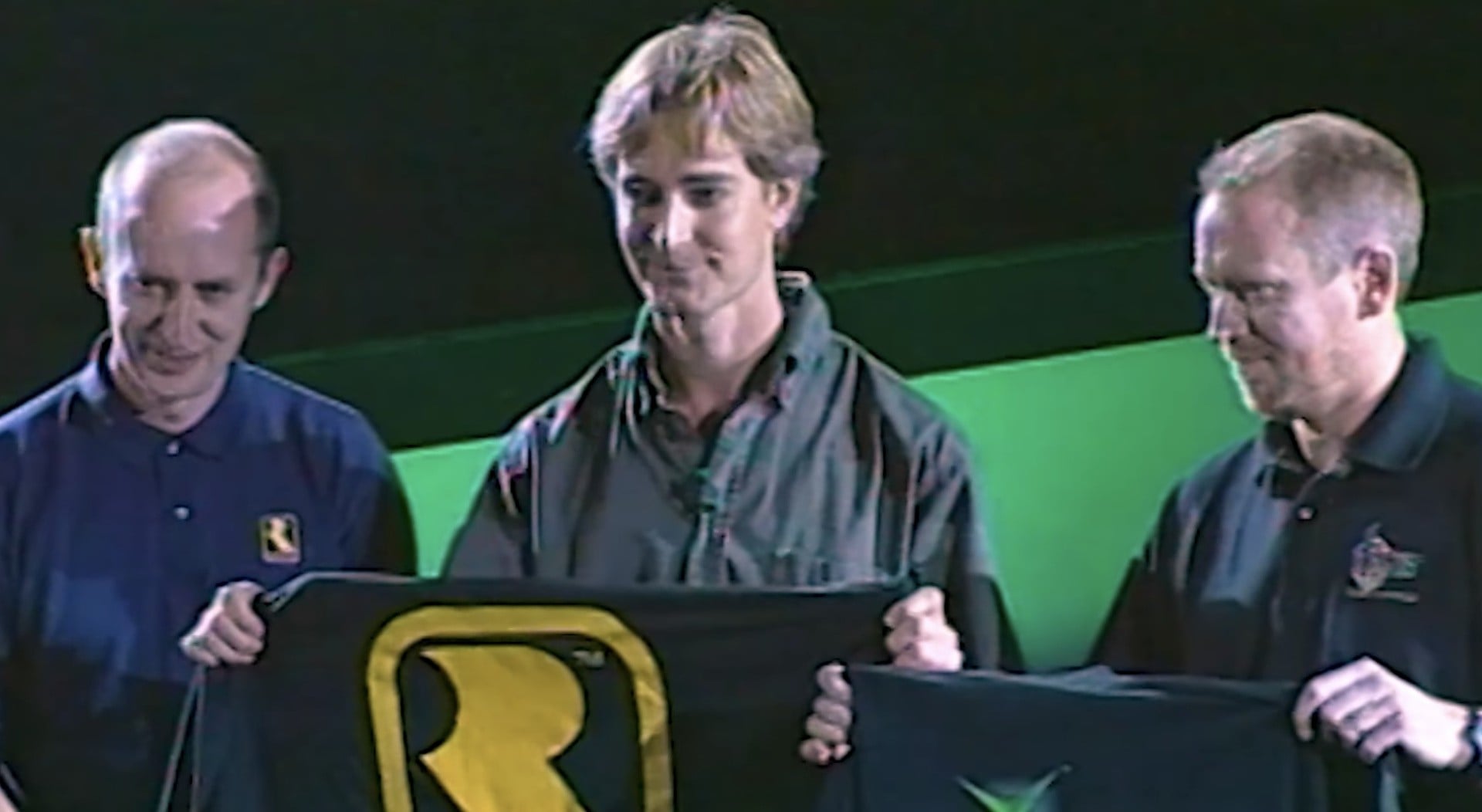
Ed Fries is usually linked with Xbox. That makes sense. In the late 1990s and early 2000s, he was one of the people at Microsoft most closely tied to gaming, third-party support, and the early push to make Xbox feel like a serious console platform. But his history with games did not begin in a boardroom, or even at Microsoft. It started much earlier, with a technical family, a school full of fresh Apple II machines, and the kind of curiosity that could turn a teenager into a game maker before he had any real industry footing.
That longer story matters because it gives the Rare deal a different shape. Fries was not simply a corporate executive looking at an acquisition from the outside. By the time Microsoft bought Rare, he had spent years writing code, managing programmers, watching teams grow, and building a games business from inside a company that had once been better known for DOS, Word, and Excel. He understood games as software, as craft, as business, and as culture. That mix made him a central figure in one of the most talked-about moves of the early Xbox years.
A Technical Home Before Games Became Work
Fries grew up around engineering. His father was an electrical engineer who moved to Seattle to work for Boeing. His mother had also studied engineering, earning a chemical engineering degree at Bucknell University, where she met his father. She worked for Boeing too, then left to have children, later returned to study at the University of Washington, earned a master's degree in computer science, and went back into technical work. In that home, computers and engineering were not strange distant things. They were part of the world around him, long before games became his career.
Even so, Fries did not begin with a fixed plan to make games for a living. The shift came when he started high school in 1979. His school had just received a group of Apple II computers, and Fries and his friends quickly became hooked. They played games such as Choplifter, the original Wizardry, and the Ultima series. Those titles were more than entertainment to him. They were doors into a new kind of creative problem solving, where a machine could become a dungeon, a battlefield, or whatever a programmer could manage to build.
One Christmas, he asked for a computer and expected an Apple II. Instead, he received an Atari 800. At first, that may have seemed like a detour from what he had imagined, but it became the machine he learned on. He played with it, studied it, and began making things himself. This was the early home-computer age, when the gap between player and creator could feel surprisingly small. If you had patience, a manual, and enough stubborn energy, you could move from playing arcade-inspired games to trying to write your own.
Arcades, Cards, And First Ideas
Fries' early influences were practical. He did not describe a grand design philosophy. He looked at what he was playing and asked what he might be able to make at his own skill level. In arcades, he would see a game and think about whether he could build something like it. At the pizza place where he worked, there was a small arcade in the back, and he spent time with games such as Galaxian. Away from the machines, he and his friends played a lot of cards, so a card game could become a programming idea too.

That is a very old-school route into game development, and it still feels familiar. A player sees a mechanic, a screen, a rhythm, or a challenge, then tries to recreate it with the tools at hand. Fries moved through that phase while still in high school. After making a Spacewar-style game, he kept taking on more assignments and projects. By partway through high school, he was already fairly sure that programming was what he wanted to do for a living, even if the path into professional games was still rough and uncertain.
His first publishing deal was not glamorous. Fries later described it as a terrible deal, with the kind of laugh that comes from surviving it. He was a kid earning very little money at a pizza place, trying to make enough to buy more games. The publishing arrangement gave him no advance, so there was no money up front. The royalty rate was 5 percent. For a young programmer looking for a way into the business, it was still a step, but it was not the sort of deal anyone would hold up as generous.
Early Steps In Games
- Fries began learning around home computers while still in high school.
- His school received Apple II computers in 1979, which helped spark his interest.
- He played games including Choplifter, the original Wizardry, and the Ultima series.
- He received an Atari 800 for Christmas and used it as a key learning machine.
- His early ideas came from arcades, card games, and what seemed possible at his skill level.
- His first publishing deal had no advance and a 5 percent royalty rate.
Romox, College, And The Crash Around Him
After high school, Fries began a computer science degree at a college in New Mexico in the fall of 1982. He continued working with Romox on the side. For that company, he wrote Ant-Eater and Sea Chase. This was still a period when a young programmer could be far away from the main industry centers and still take part in the home-computer software market. But distance also made uncertainty harder to read. Communication was nothing like it is now, and when something went wrong, there was not always an easy way to see the bigger picture.
By 1984, Romox stopped picking up the phone. Fries did not immediately know what was happening. He was, as he put it, in a tiny town in the middle of nowhere in New Mexico. The silence arrived before the explanation. The timing suggests the wider trouble around the games business was closing in, but the key point from his side is simple: he was still young, still building games, and suddenly the company he had been working with became unreachable. It was an early reminder that the games industry could be exciting and fragile at the same time.
Finding Microsoft In 1985
In 1985, Fries joined Microsoft, the Washington-based computer company whose biggest products were then DOS and productivity software such as Word and Excel for Macintosh computers. He first came in as a summer hire, then later returned as a full-time programmer. This was not yet the Microsoft most console players would think of when Xbox arrived. It was a software company with a growing reputation, full of ambitious product teams and technical work that could stretch a young programmer quickly.